Coding Drops is an artistic production project, conceived as an initial experiment building on the research begun in 2024 with AfterLand. Keen to explore in greater depth the relationships between humans and non-humans in the Danube Delta, we invited the artists Floriama Candea, Mark IJzerman, and Ioana Vreme Moser to create a dedicated installation.
The project began with a field residency during which the artists pursued their research around a common theme: water as a means of expression and a technological medium. Following a period of production, the installations were presented as part of two exhibitions in Romania and a podcast in Austria.
Coding Drops
Residency, artistic production and exhibition
Dates
April - October 2025
Collaboration
Coding Drops explores the role of water as a powerful binding force in the relationship between human communities and the environment. The aim of the project is to put universal themes into perspective through the subjects explored by the artists, such as the impacts of human activity, the history of human communities, and the natural maintenance of ecological balance. Through their art installations, Floriama Candea, Mark IJzerman and Ioana Vreme Moser present narratives specific to the Danube Delta that reflect the global challenges facing water and wetlands.
Following preliminary discussions with research teams from the INFLPR (National Institute of Laser, Plasma and Radiation Physics) and the DDNI (Danube Delta National Institute) to establish an initial concept, identify the artists’ needs and organise the residency, we travelled to the Danube Delta in June 2025. Our team was hosted at the Ivan Patzaichin Museum in Mila 23 at first, after which we moved to Sfantu Gheorghe, a town in the southern part of the Delta at the junction of the river and the Black Sea. There we met the ecologist Razvan Crimschi and Stefan Constantinescu, a researcher at the local geographical research station.
This period allowed the artists to refine their ideas, collect samples to be studied and used later in their installations, make underwater recordings, and also talk to local residents and gather new stories.
The following months were spent producing the works to be presented to the public.
Watershed - final call
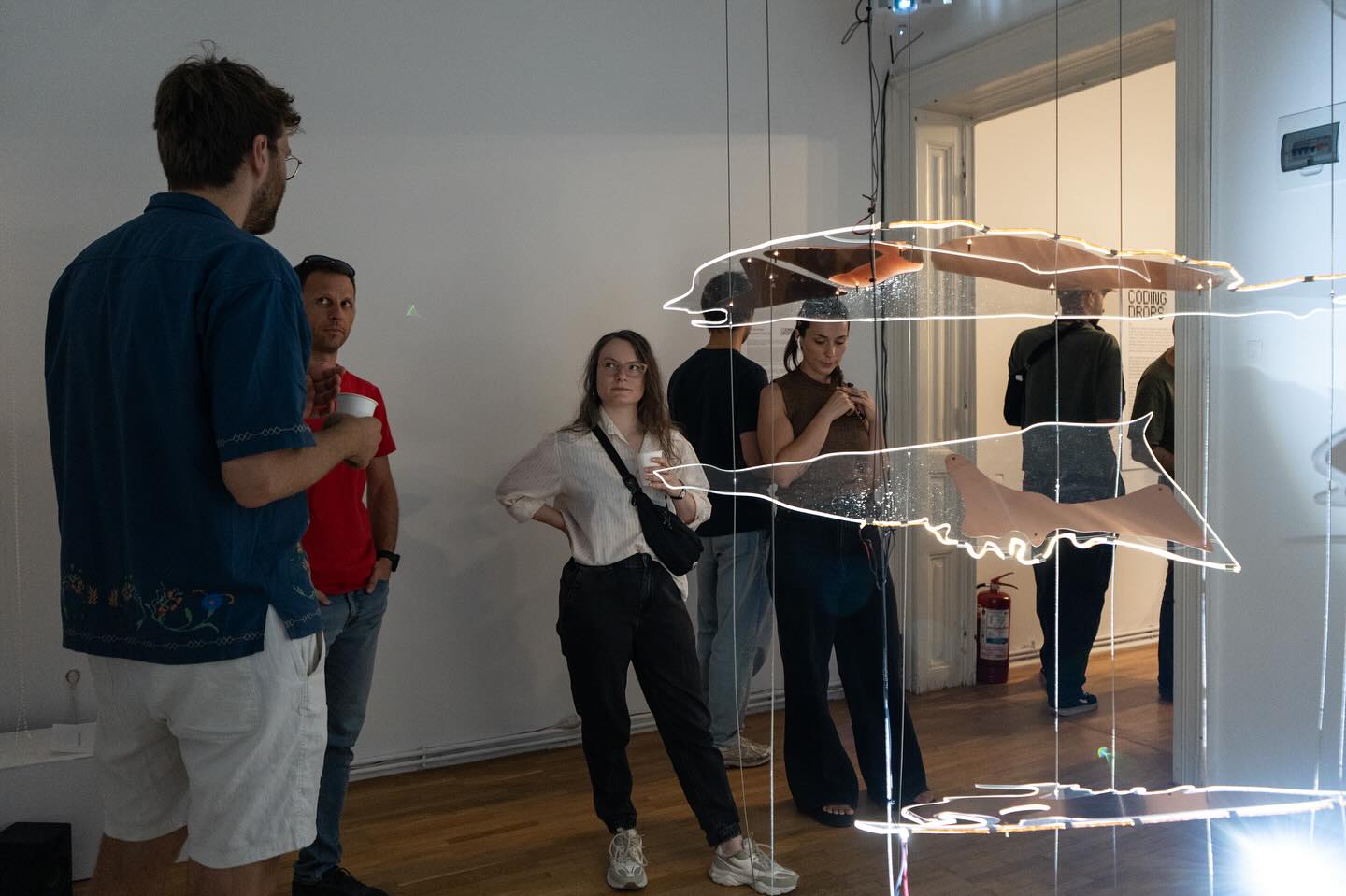
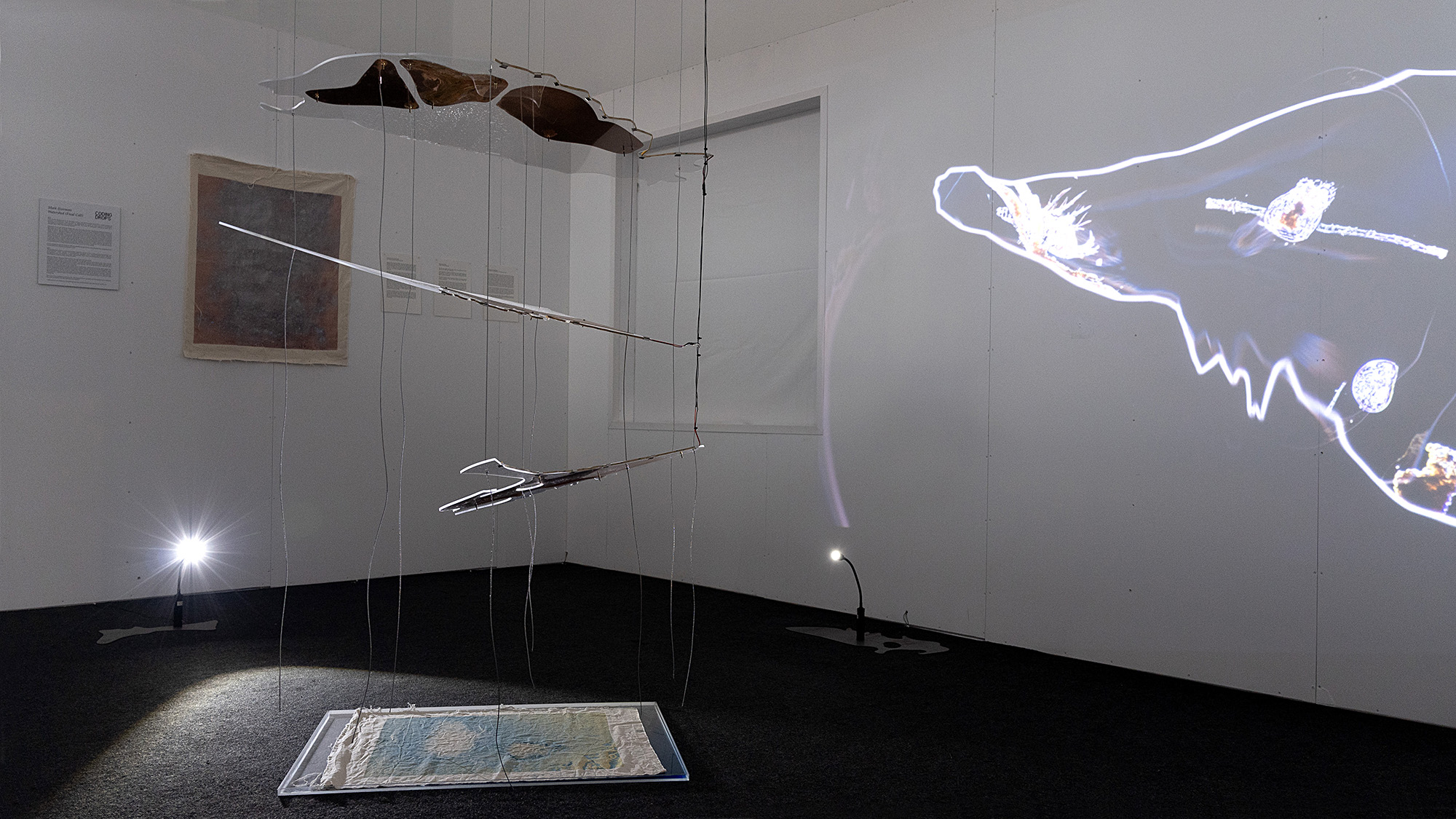
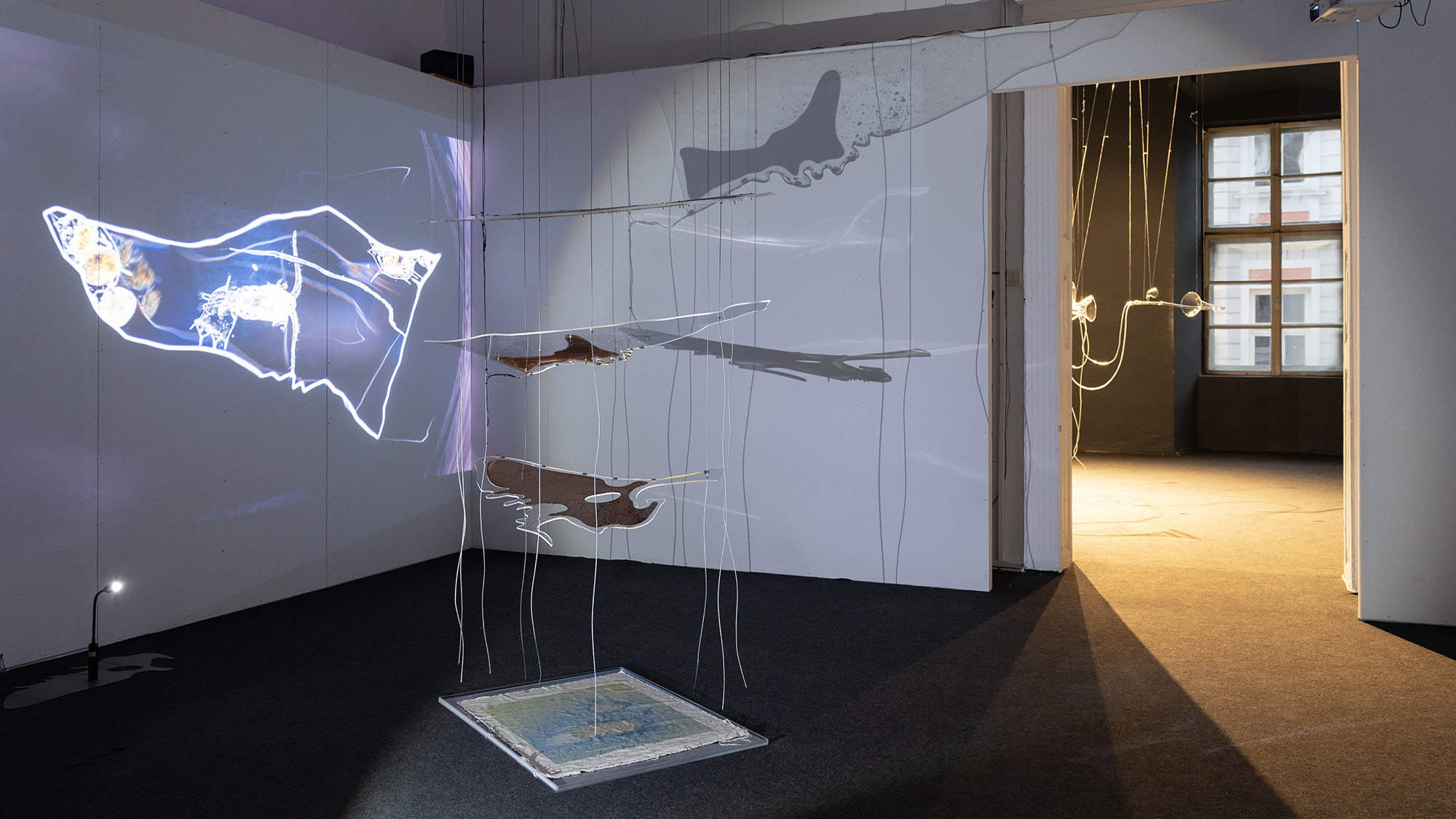
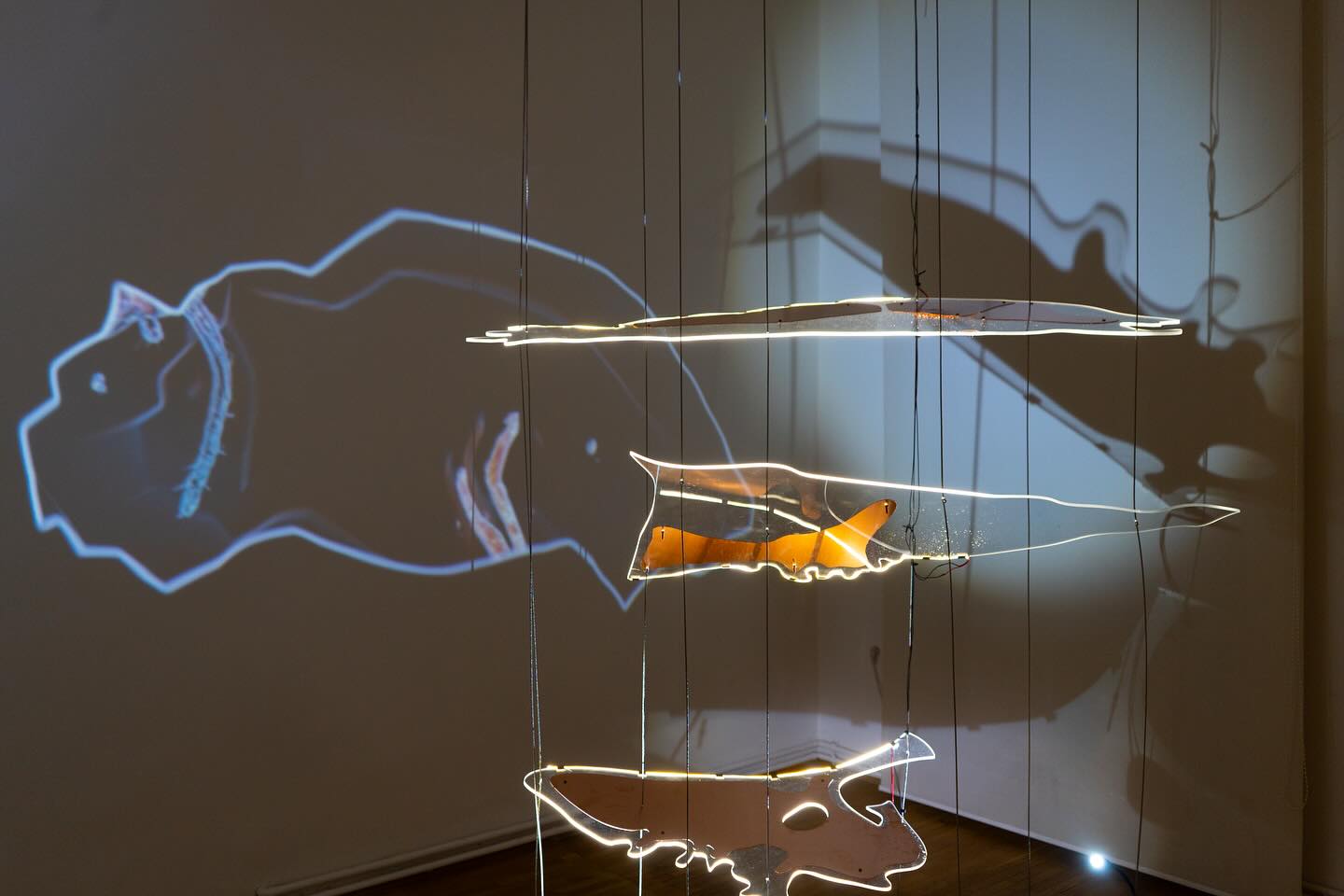
Mark IJzerman has developed a variation on Watershed, a piece he began creating a few months earlier during a residency at Pier-2 in Taiwan; Watershed – final call brings together elements representative of the Delta through a sculpture, a sound recording and a projection. The sculpture consists of three pieces made of acrylic and copper, representing the three plateaus separated by the Danube’s channels. Droplets of water circulate over them, staining the copper in places and eventually flowing onto a piece of fabric that reacts to contact with the water, altering its colour and creating watercolour-like patterns.
This section explores the geographical and hydrological changes caused by human activity throughout history, a slow chain reaction that demonstrates the long-term impact of our actions on the sedimentation process (and, consequently, on the environment). The sound piece is based on underwater recordings made on site and highlights the significant difficulty in finding sufficiently quiet places to observe aquatic life, despite the region’s isolation. Finally, the projection displays visuals of plankton in motion, captured in water samples taken between Mila 23 and Sfantu Gheorghe, highlighting the richness of the organisms living in the transition zone between freshwater and gradually increasing salinity.
Simultan festival exhibition
photo credit : Levente Kozma
photo credit : Levente Kozma
Simultan festival exhibition
photo credit : Levente Kozma
photo credit : Levente Kozma
/SAC gallery exhibition
photo credit : Elena Maxemciuc
photo credit : Elena Maxemciuc
Neural Bloom
Simultan festival exhibition
photo credit : Levente Kozma
photo credit : Levente Kozma
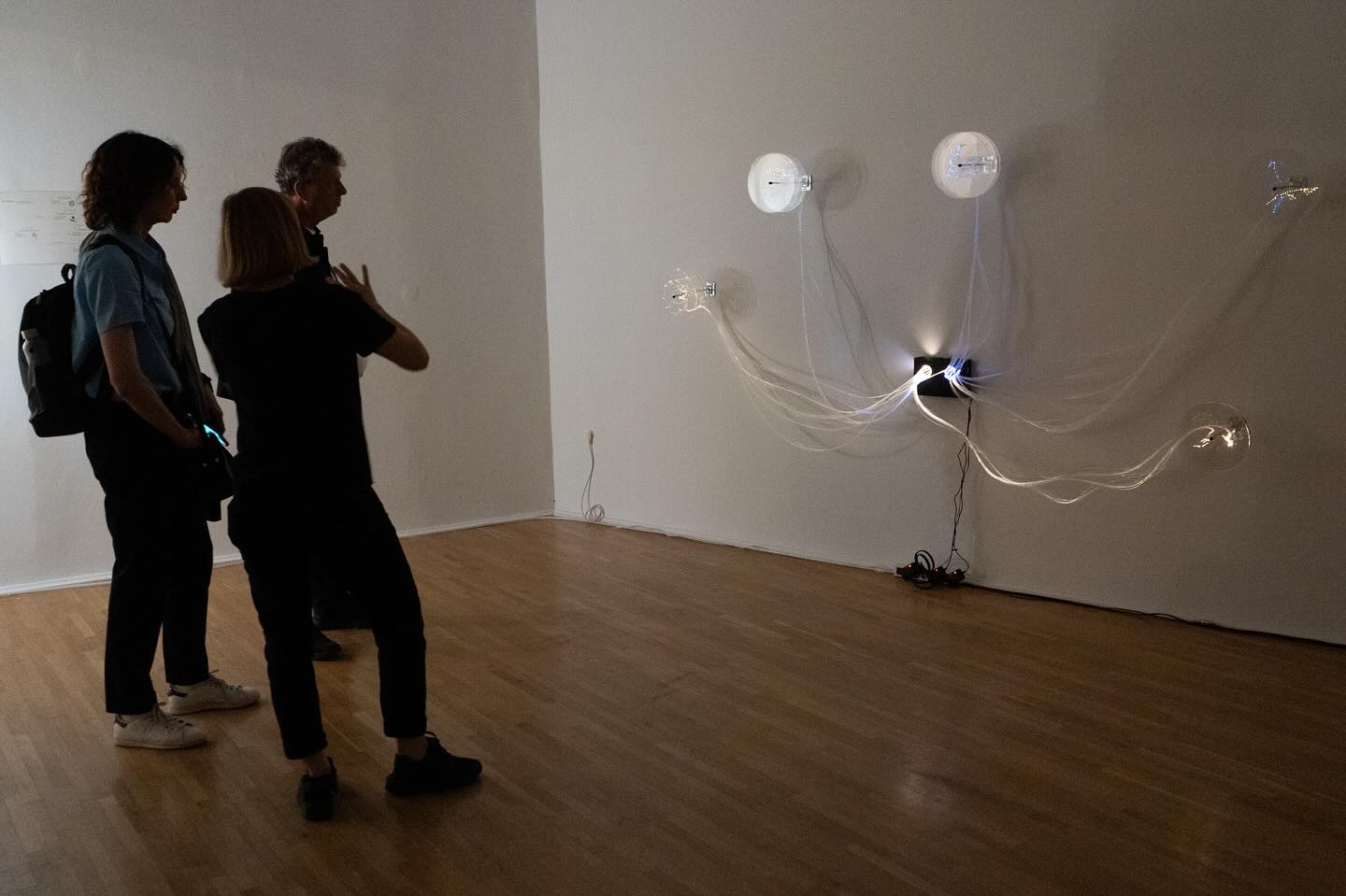
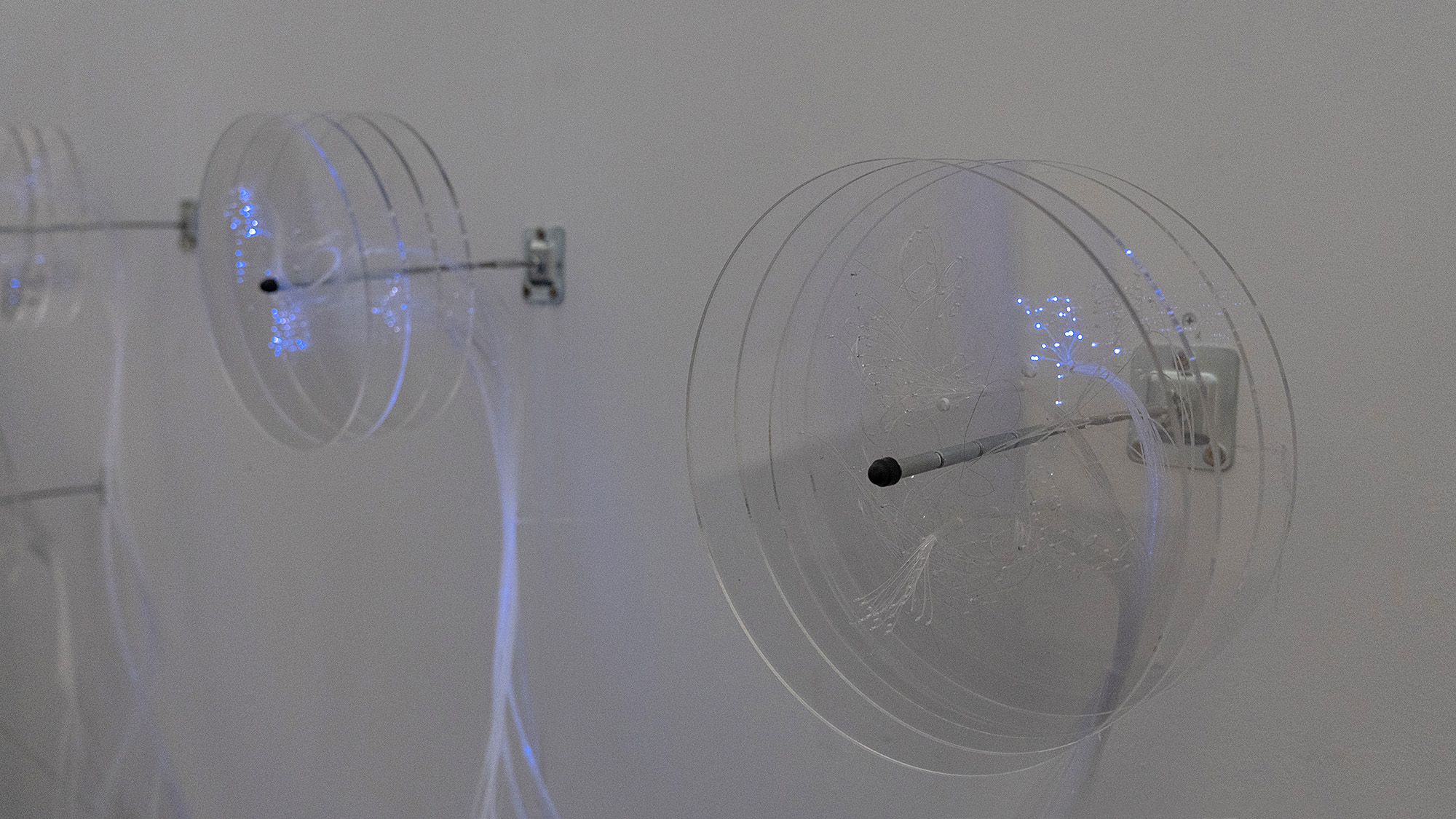
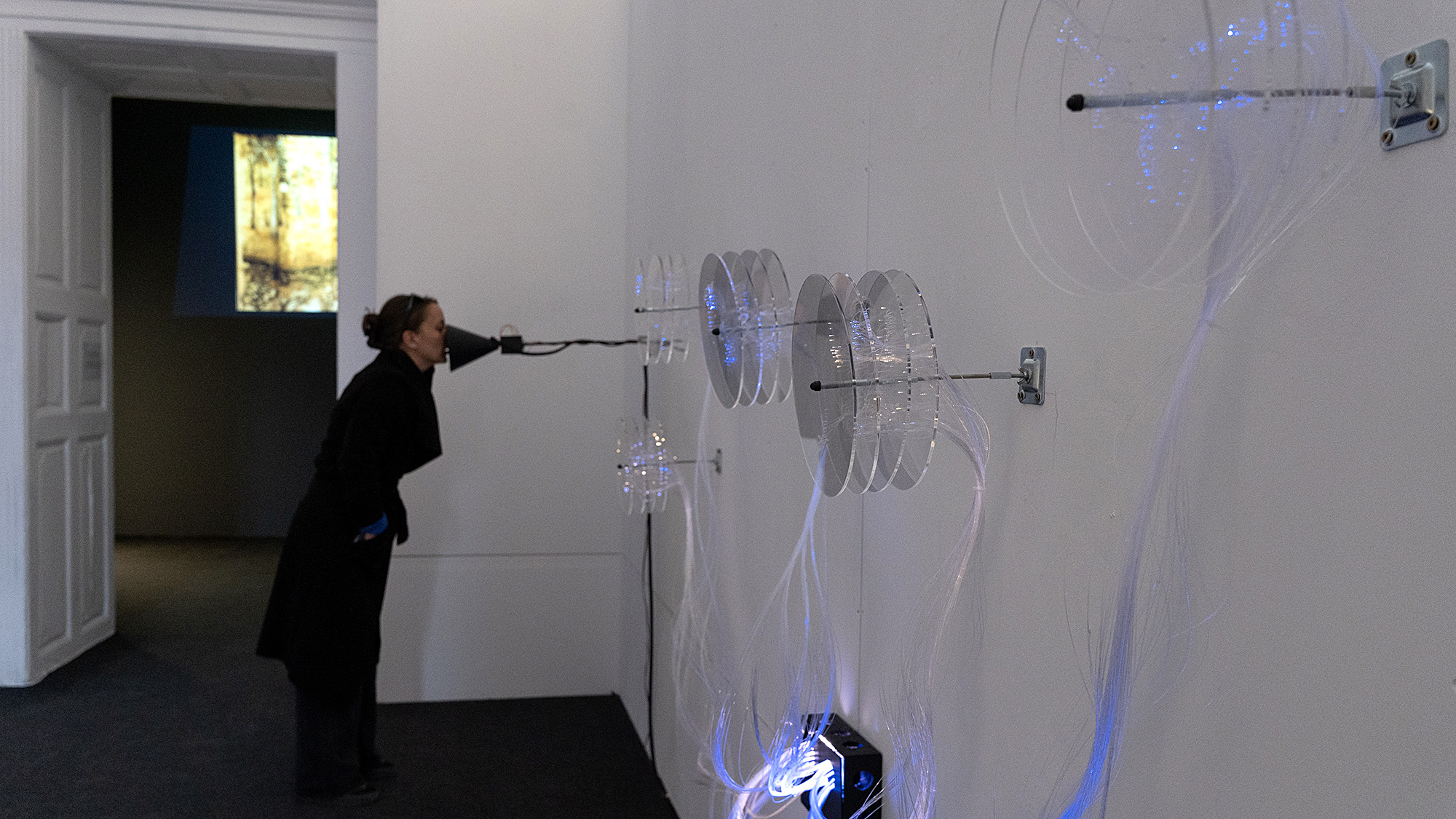
In Neural Bloom, Floriama Candea explores the cause-and-effect relationships between various organisms that produce oxygen, absorb carbon dioxide, and/or play a key role in the natural carbon cycle. In a purely visual installation, she creates five circular plates, each representing a plant or a cellular organism: a water thistle, a water lily, a reed, a hornwort and a diatom. The plates are connected by optical fibres that flash slowly to signify respiration, and the ensemble is connected to a sensor that detects carbon dioxide. When triggered, the fibres activate simultaneously and change colour to represent the intertwining of the natural respiration cycle of plant species. Visitors are invited to blow into the sensor, which will trigger a chain reaction within this cycle. Floriama bases her concept on Luce Irigaray’s work, “The Forgetting of Air”, a critical and feminist perspective on classical Western philosophy that reinterprets existence through breathing as opposed to the act of thinking; “I breathe, therefore I am”. By superimposing these layers of interpretation, the installation makes tangible the invisible and forgotten bonds that make human beings an integral part of nature.
Simultan festival exhibition
photo credit : Levente Kozma
photo credit : Levente Kozma
Nautophone Telecom
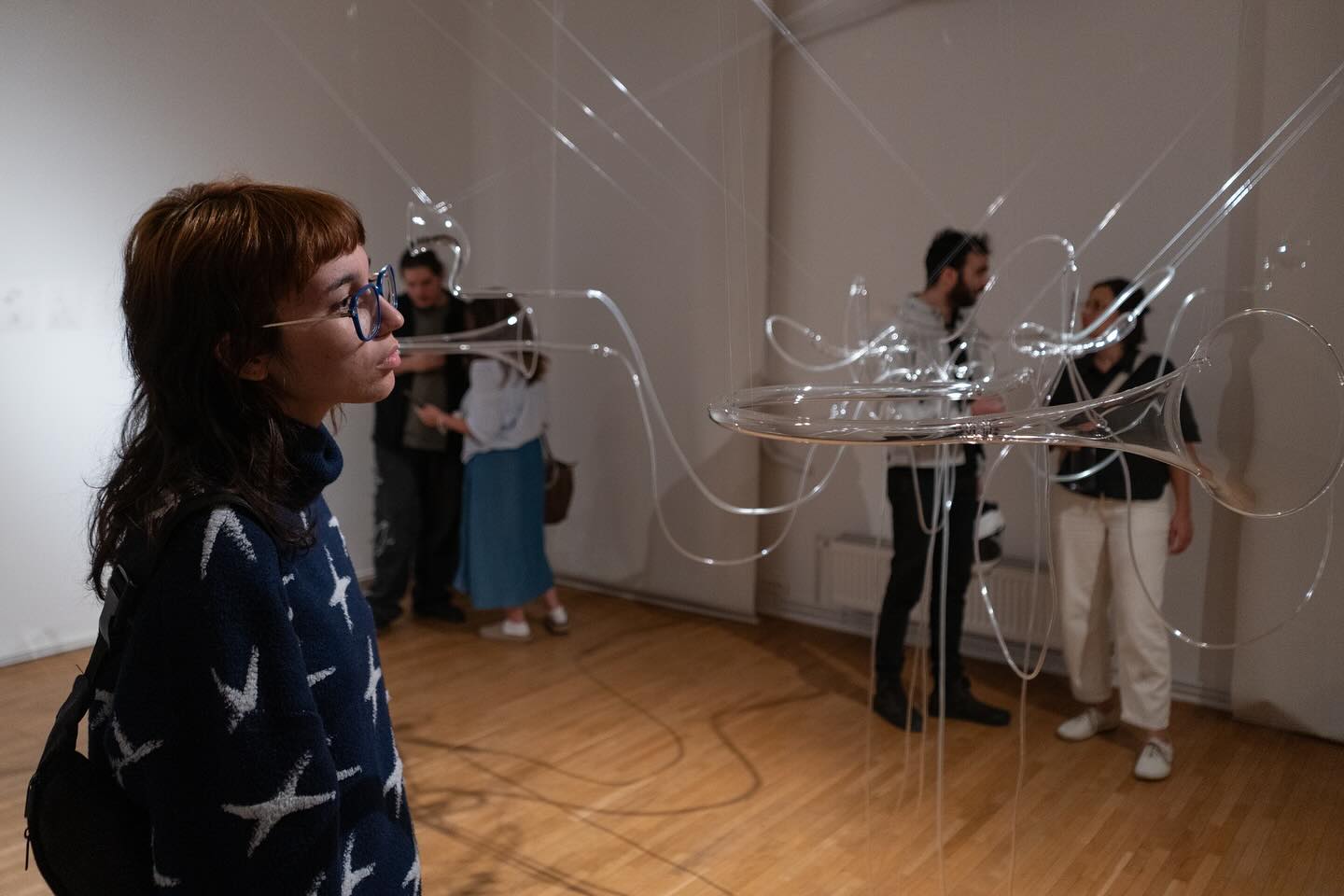
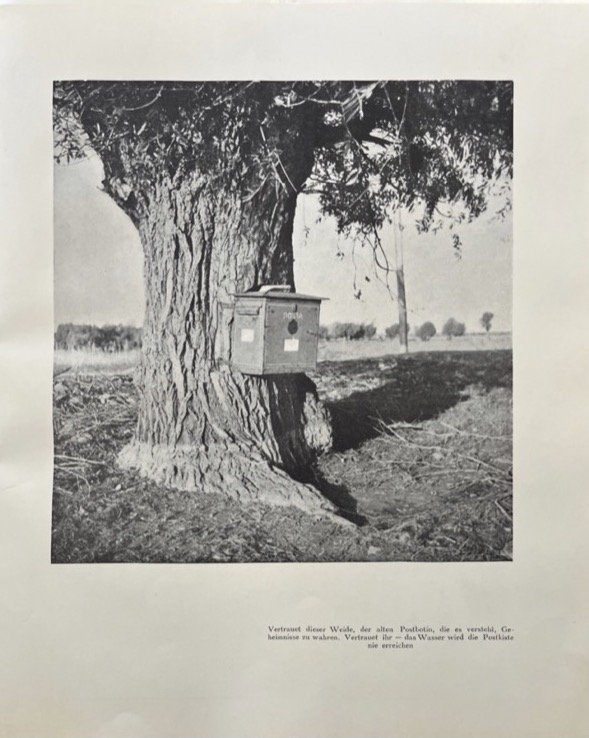
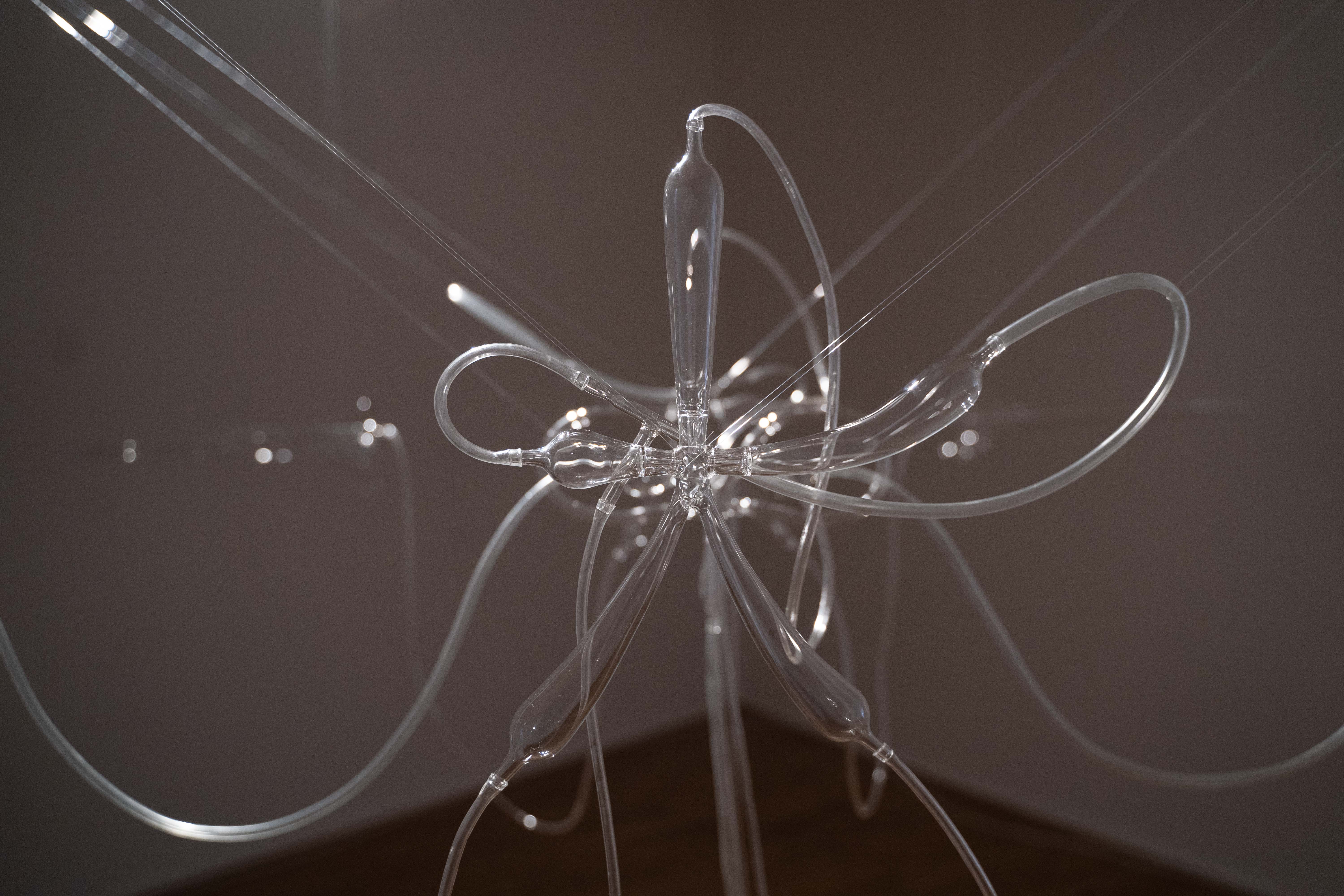
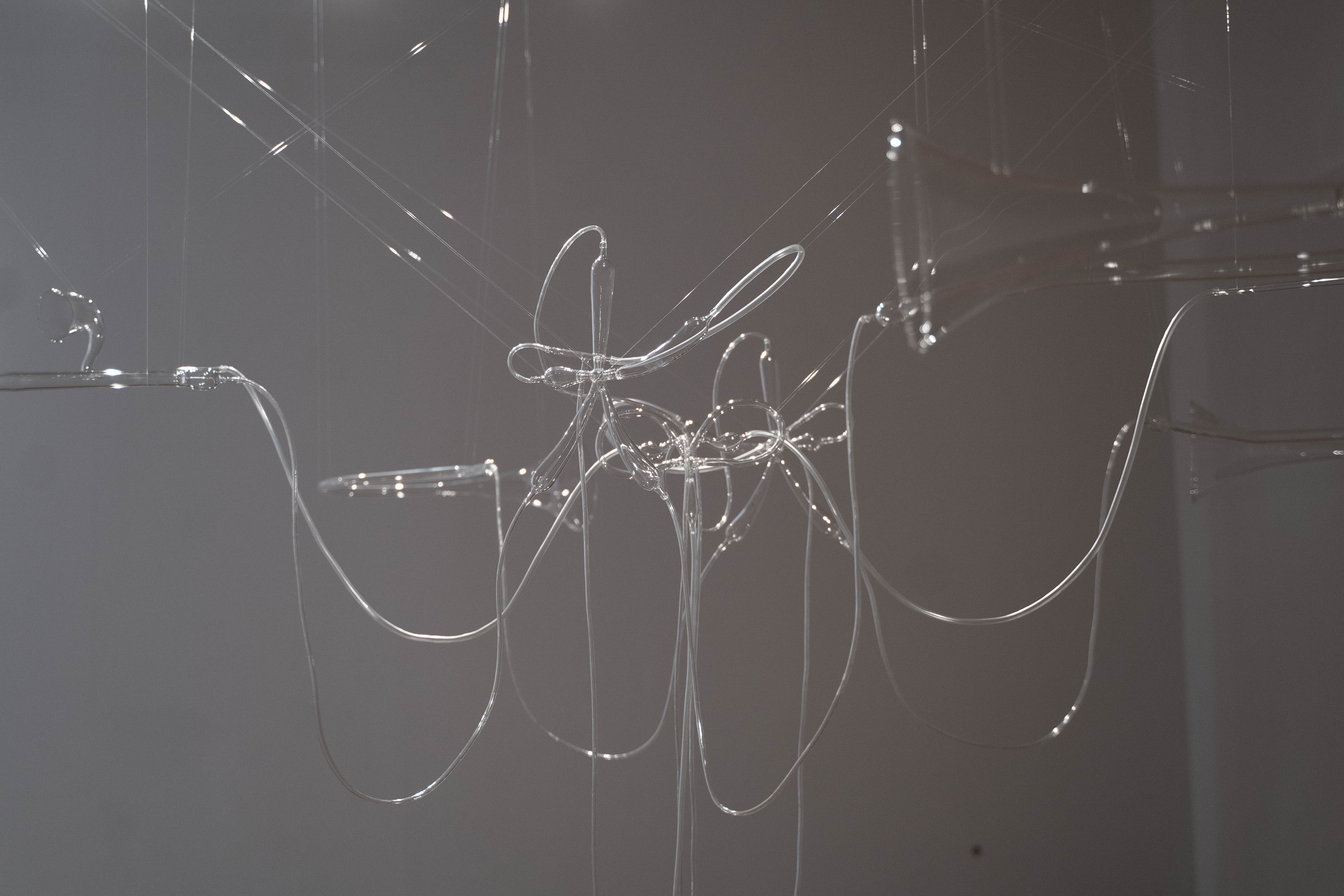
With Nautophone Telecom, Ioana Vreme Moser draws on her fluidic elements to construct a foghorn based on obsolete sound devices once used to guide ships into the Delta’s ports in foggy weather. The idea originated from a photograph of a 1920s postbox bearing the following caption: “Trust this willow, this old postman who knows how to keep secrets. Trust him: the water will never reach the postbox.” Ioana explores local modes of communication, a theme that ties in with the interest in electronics that predominates in her work.
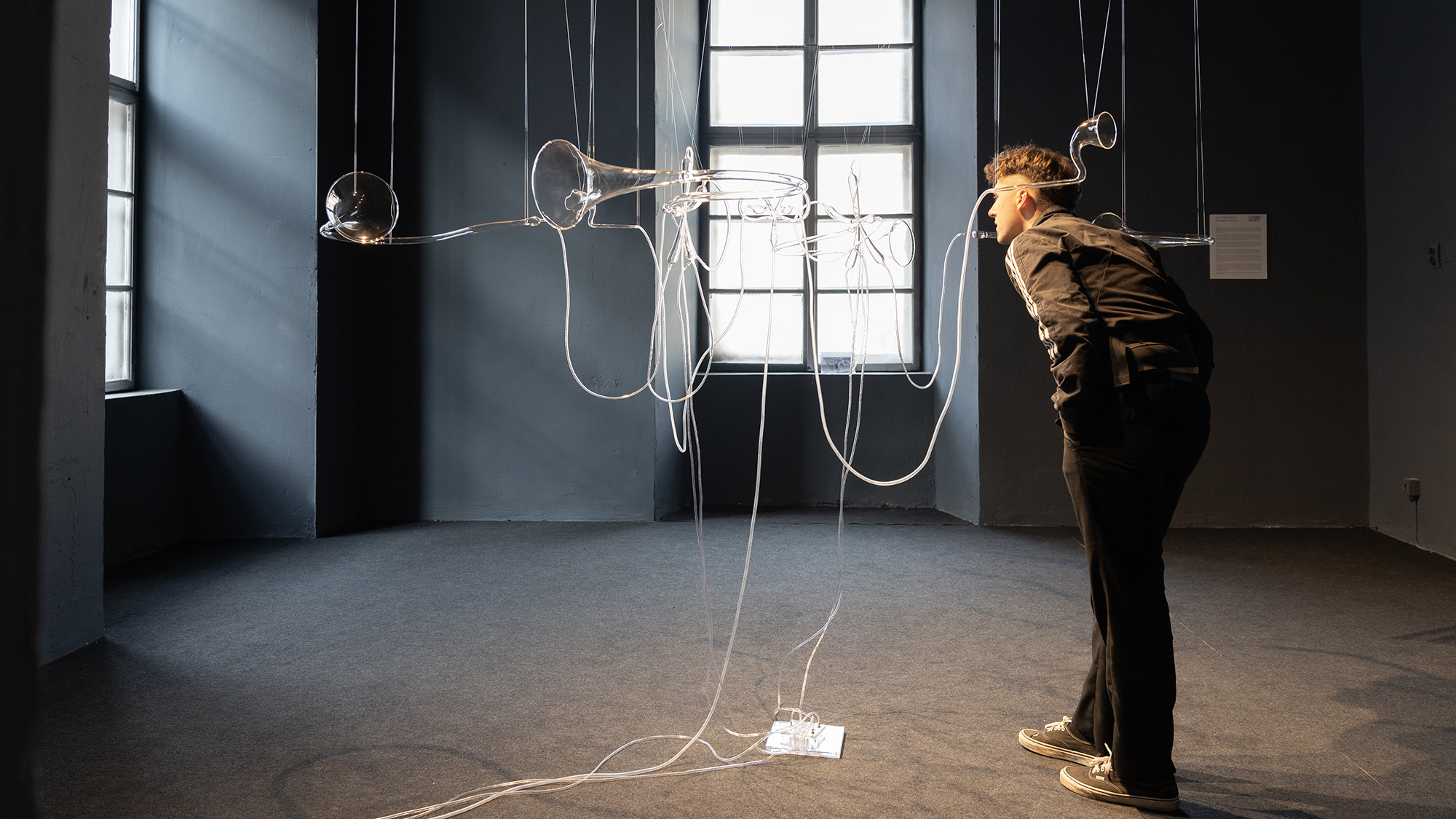
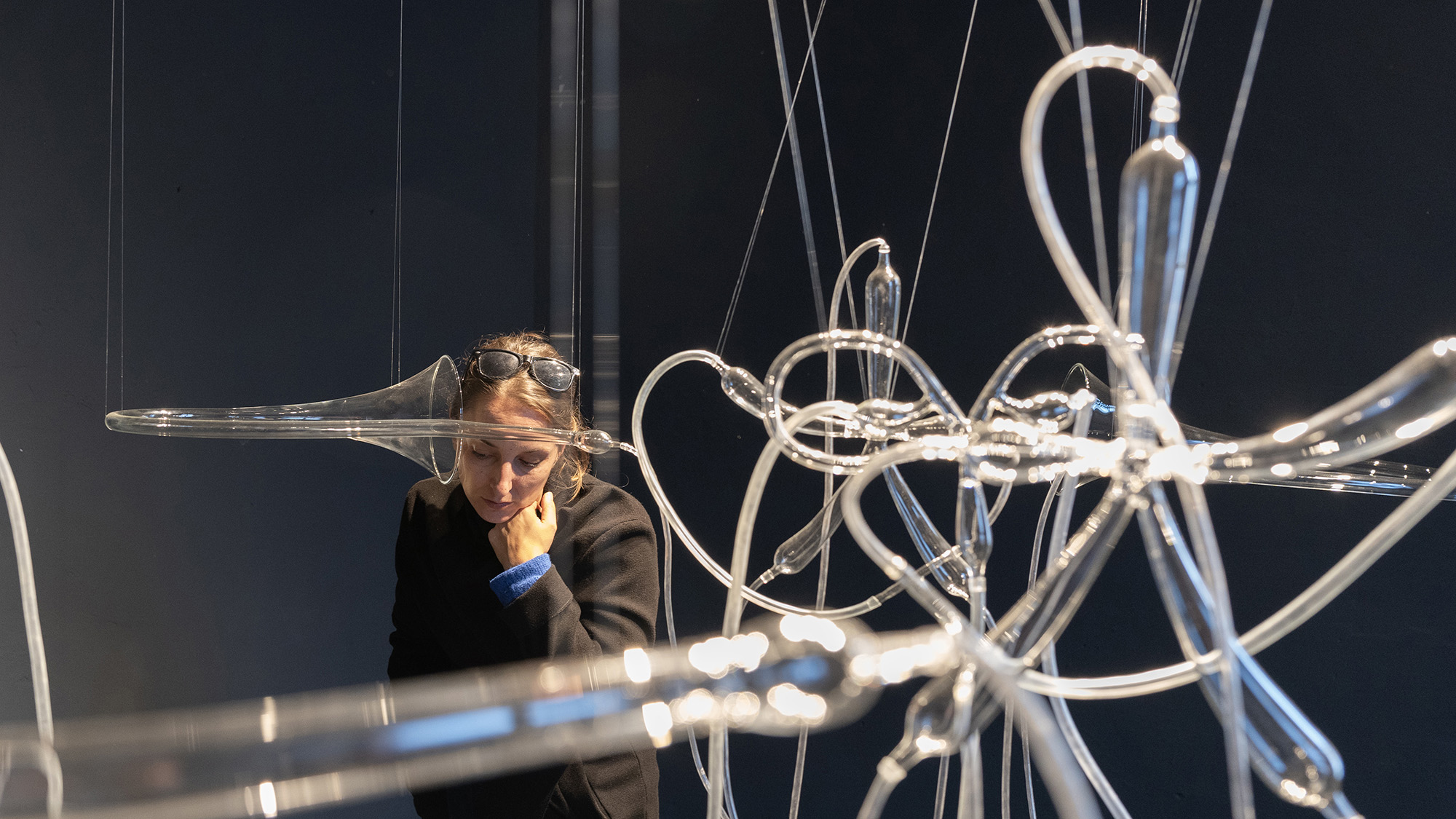
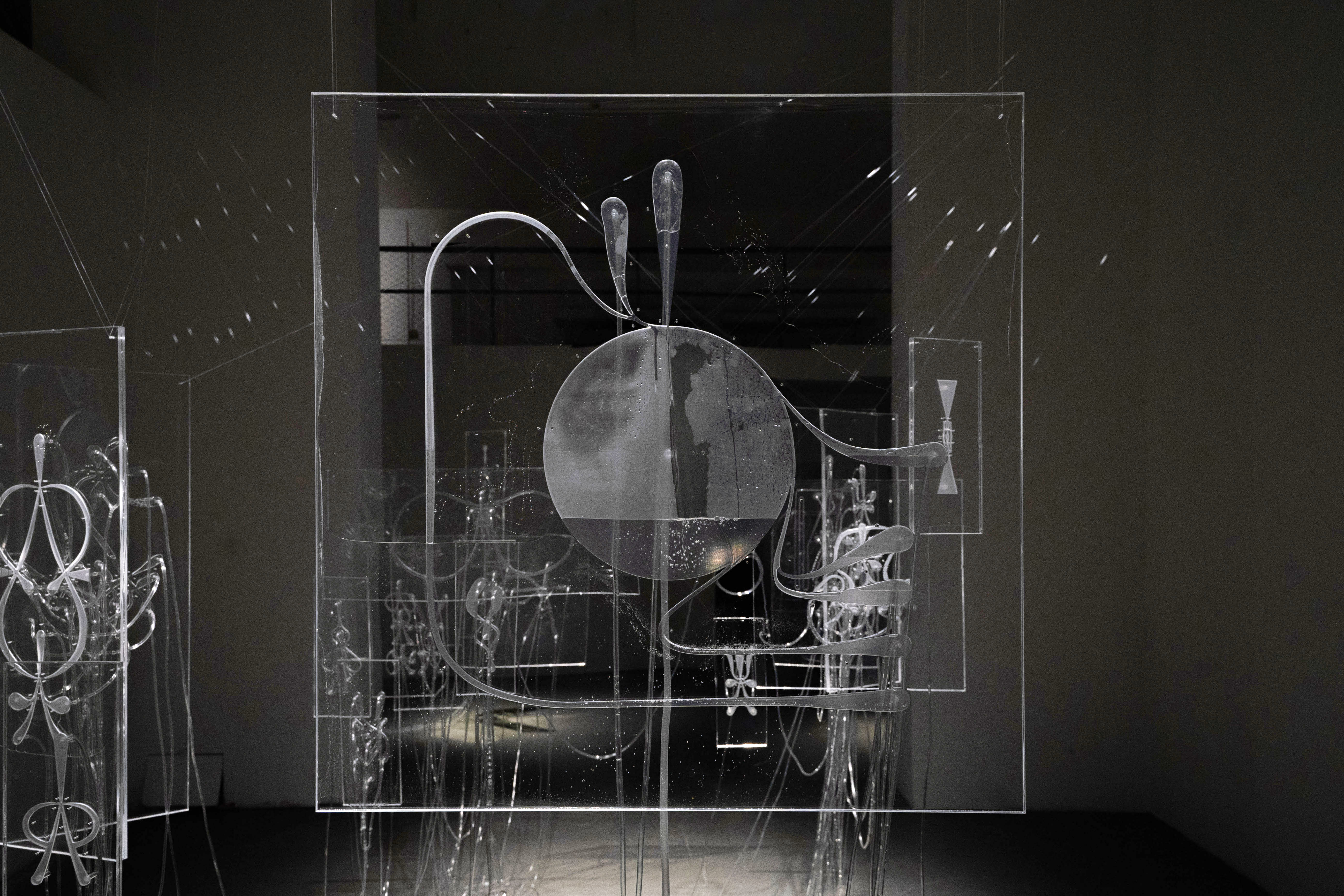
The Nautorphone Telecom system connects tanks and tubes through which air is pumped by a compressor. This means not only that the path taken by the airflow can vary depending on the pressure, but also that it can be controlled by the Coanda effect. The air follows a predefined path resulting from a series of operations, and emerges providing information. Here, the information takes the form of a sound, specifically a “goodbye” in Morse code, which is amplified by six funnel-shaped instruments. Part of the installation is made of glass, a double nod to sand; on the one hand, the raw material needed for its manufacture, and on the other, the heavy metal impurities found in the sand on Sfantu Gheorghe beach, generally generated by electronic waste and by electricity production from the industrial complexes bordering the Danube.
/SAC gallery exhibition
photo credit : Ioana Vreme Moser
photo credit : Ioana Vreme Moser
SImultan festival exhibition
photo credit : Levente Kozma
photo credit : Levente Kozma
Simultan festival exhibition
photo credit : Levente Kozma
photo credit : Levente Kozma
/SAC gallery exhibition
photo credit : Ioana Vreme Moser
photo credit : Ioana Vreme Moser
The three installations were presented in two exhibitions: the first at the /SAC gallery in Bucharest and the second at the Simultan festival in Timișoara. The project was also the topic of a podcast on Radio FRO via the association servus.at (Linz), hosted by Davide Bevilacqua with the artist Floriama Candea, the ecologist Christina Gruber, the director of STWST Tanja Brandmayr, and the project’s producer Diane Pricop.
Coding Drops is co-funded by the National Cultural Fund Administration (AFCN) with the support of the Embassy of the Kingdom of the Netherlands and the Goethe-Institut Bukarest. The project does not necessarily reflect the views of the National Cultural Fund Administration. The AFCN is not responsible for the content of the project or for how the project’s results may be used. These are entirely the responsibility of the grant recipient.
Organisers
Qolony / Obsolete Studio
Coding Drops exhibitions
26.08 - 18.09.2025 - /SAC, Bucharest, Romania
02.10 - 12.10.2025 - Simultan Festival, Timișoara, Romania
Supported by
Scientific and cultural partners
Aknowledgements
Razvan Crimschi
Dr. Ștefan Constantinescu
Marian Zamfirescu
Florin Jipa
FabLab
Adrian Sistem Glassware
Related Projects and Articles
Danube delta #2 / In Situ
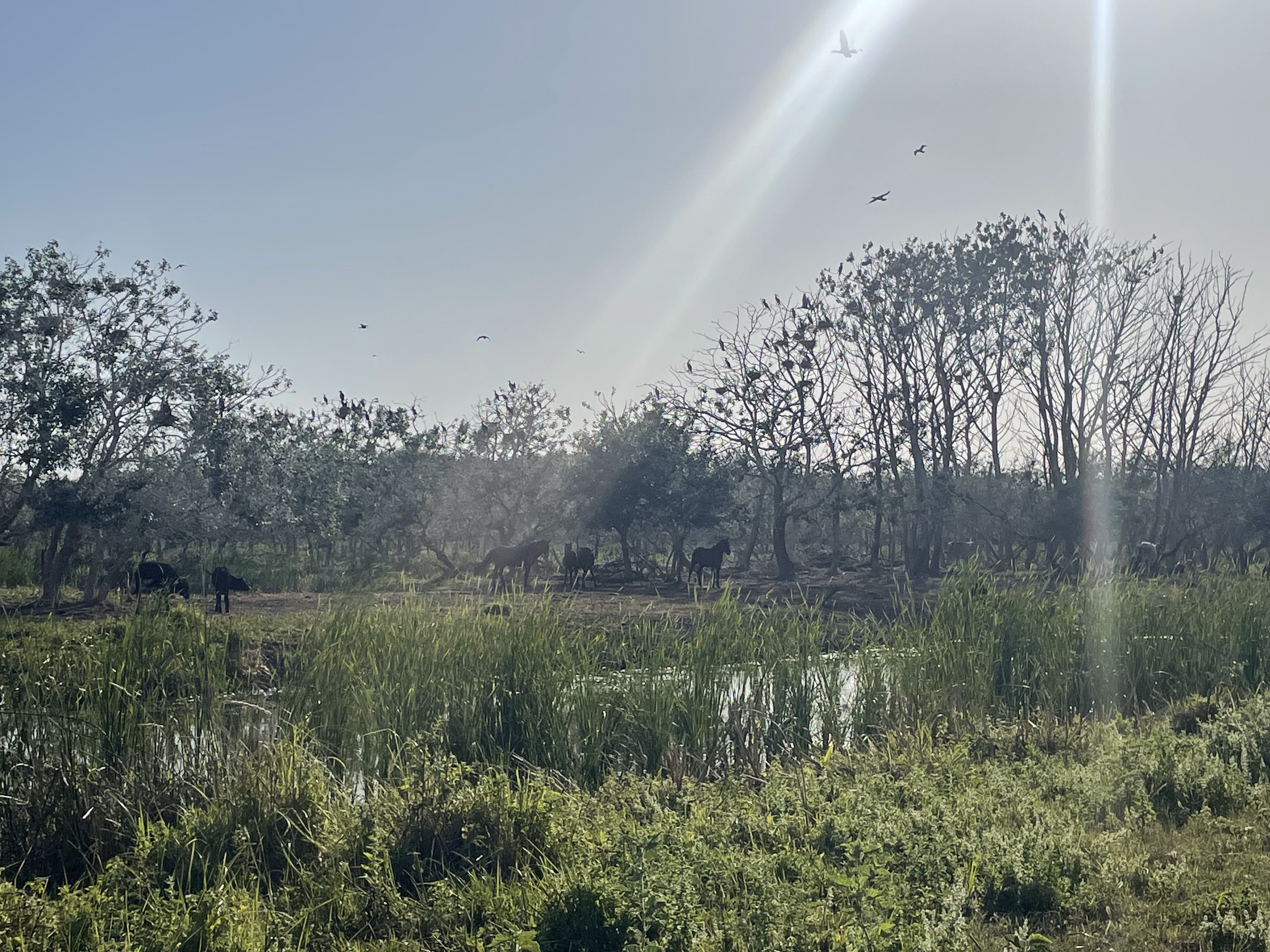
A second art-science residency in the Danube Delta as part of the Coding Drops projectRead more
AfterLand
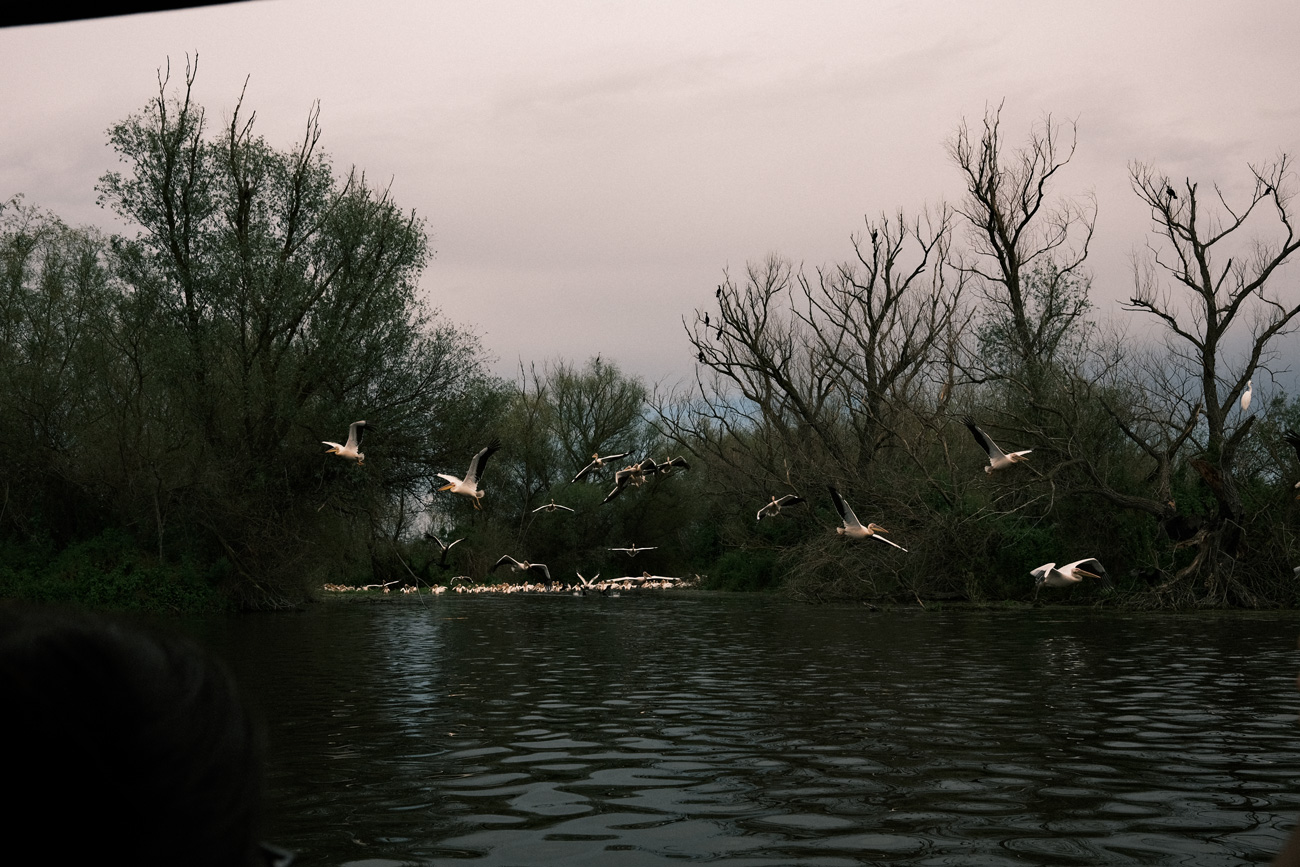
Exhibition on the relation human - more than human and research project focusing on the Danube Delta in Romania.Read more
Mark IJzerman / Portraits
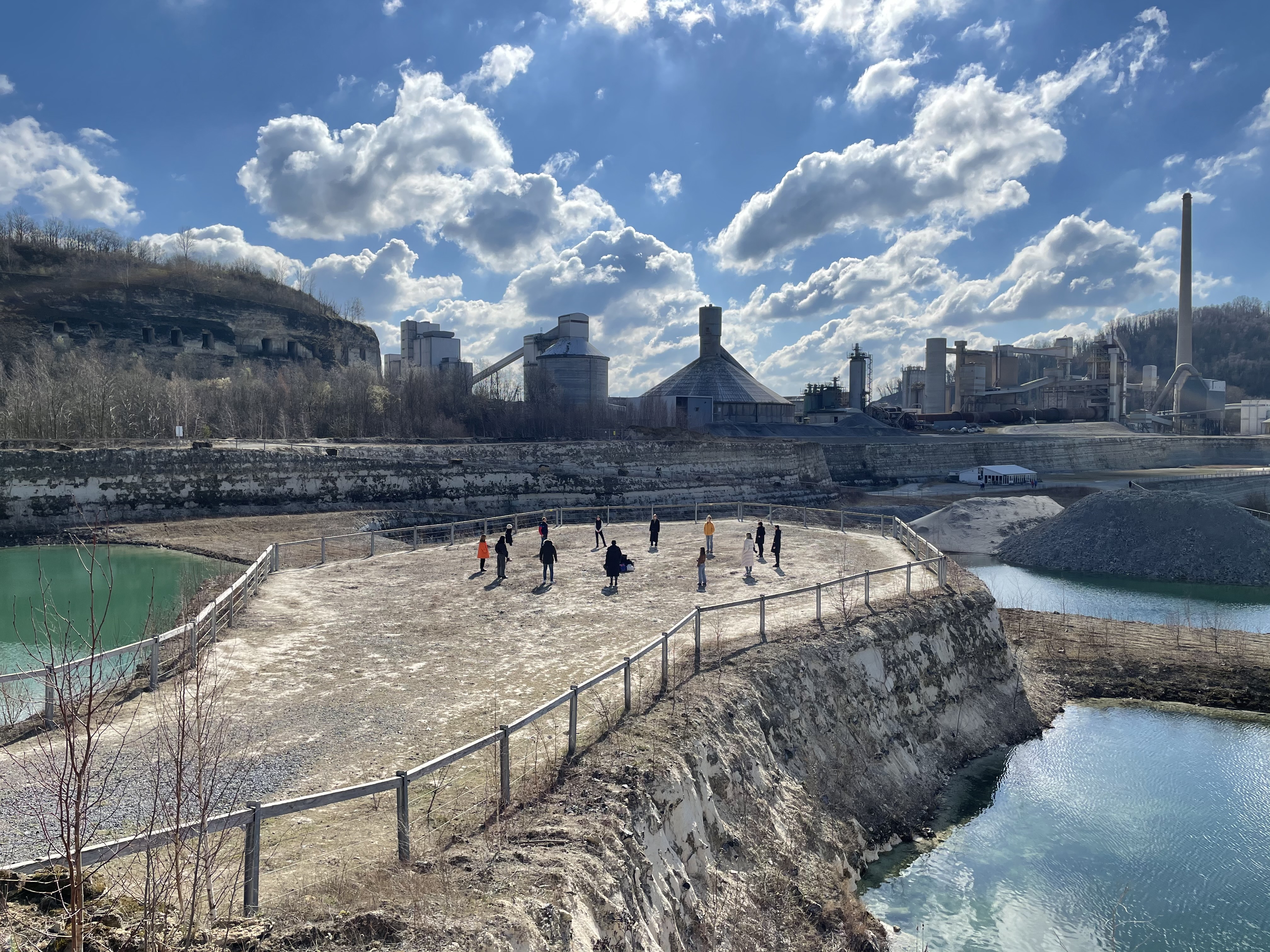
Passionate about the friction between new technologies and ecology, Mark IJzerman encourages us to step back, take a different look at our surroundings and question our choices.Read more
pier pressure / Behind-The-Scenes
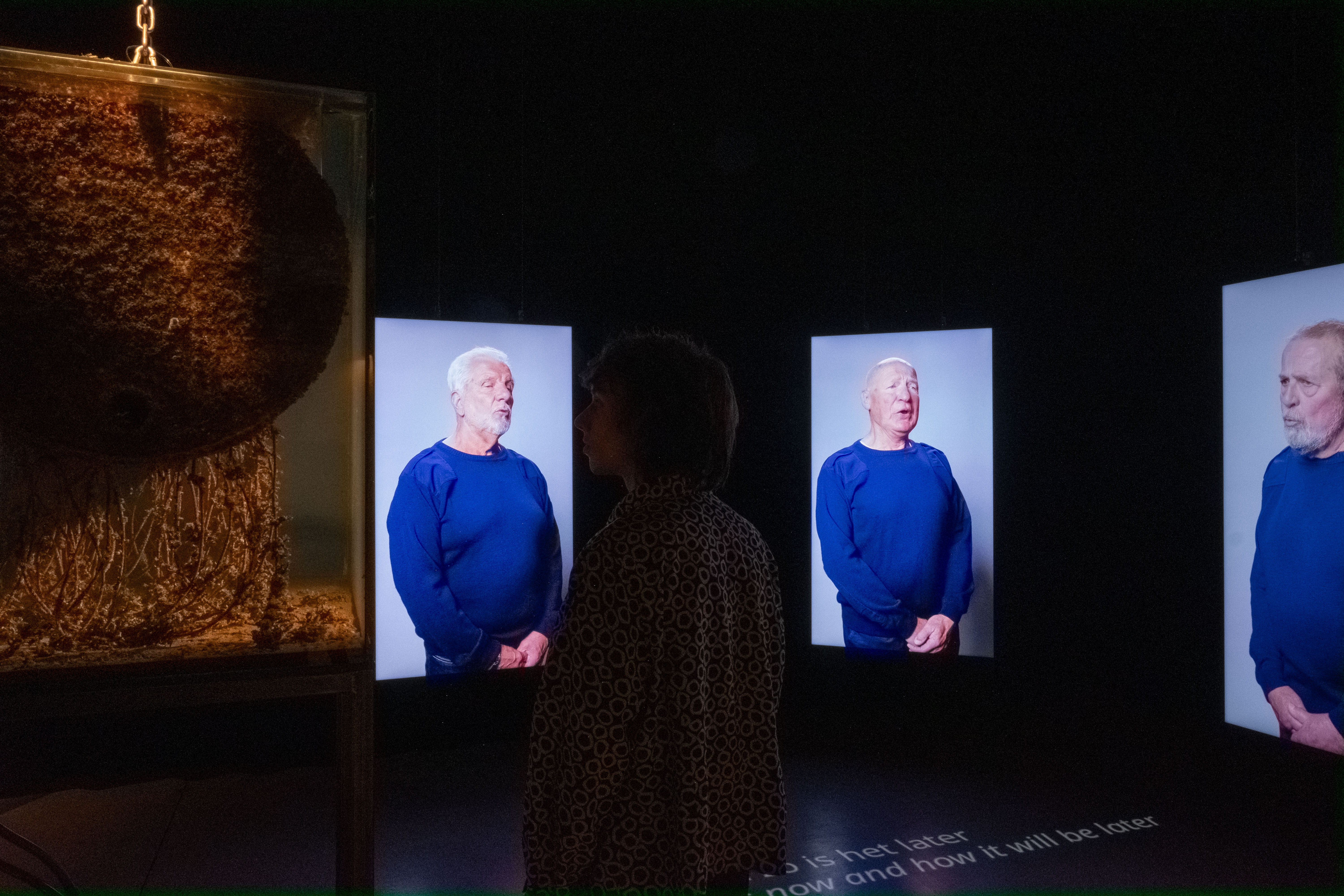
Pier pressure is an installation that contrasts the natural marine ecosystem of the port of Rotterdam with the one built by humans.Read more

Ioana Vreme Moser / Portraits
Ioana Vreme Moser’s work and career reflect her willingness to address contemporary climate and societal issues, through researching alternatives to new technologies.Read more

Form for Fluid Computer / Behind-The-Scenes
Form for Fluid Computer is an alternative computer art project based on fluidics, a technology forgotten in favour of electronics.Read more
Fluidic Cookbook - Research Lab
A creative residency based around a publication and an assembly laboratory on the theme of fluidics, research developed by the artist Ioana Vreme Moser.Read more