When science intertwines with art, solutionism often prevails, making us forget that an artist’s role isn’t always to offer clear or practical answers.The possibilities offered by interdisciplinarity are many and often appeal to our emotions rather than our ability to rationalise. Robertina Šebjanič chooses the path of empathy, inviting us to revisit the intimate nature of our relationship with the more-than-human. Starting with her own interests, she begins by studying aquatic ecosystems, eventually making them the central theme of her work, to the point of forging a unique and strong artistic identity.
Robertina Šebjanič
25.02.25
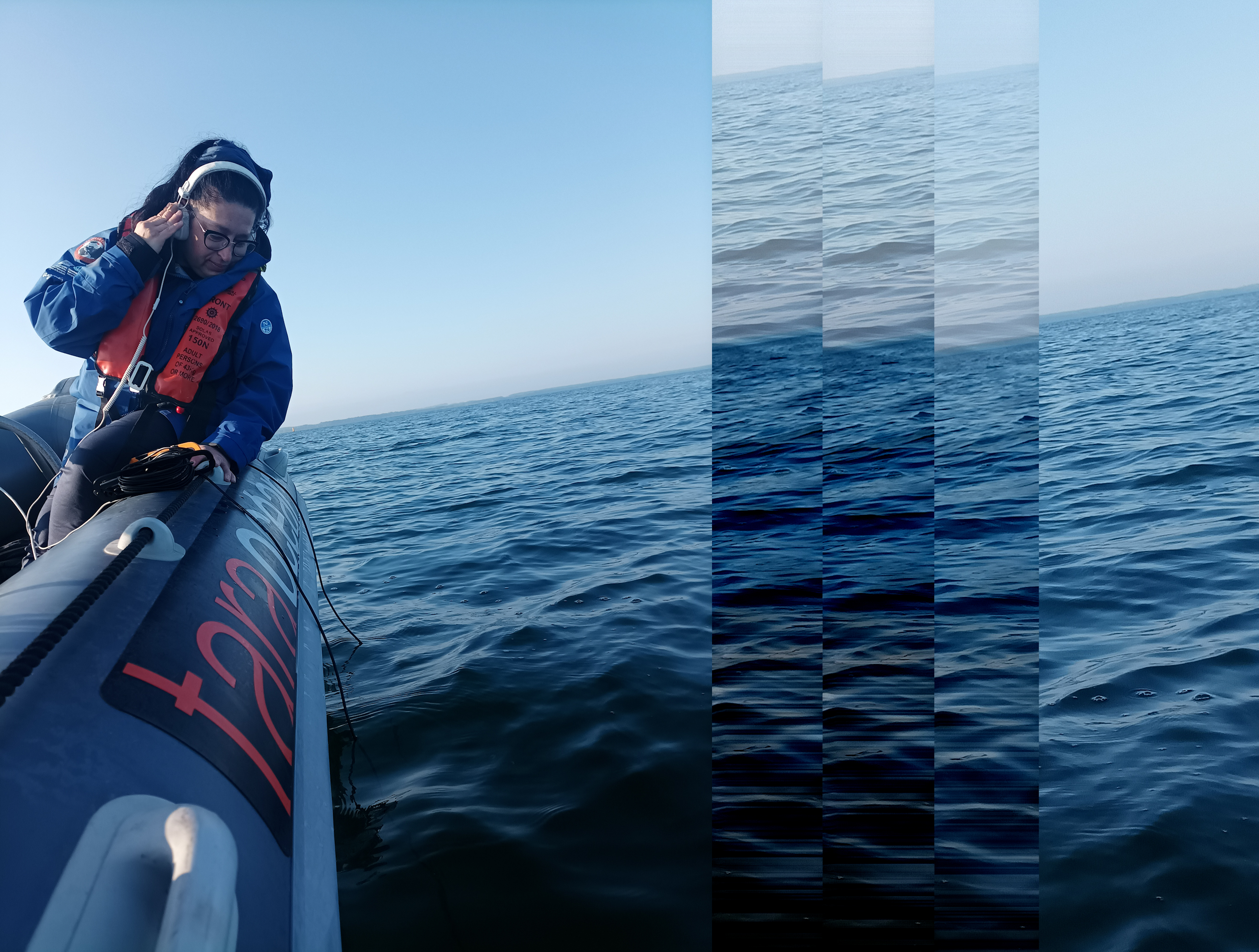
Photo credit : Alexis Gilli
"Things change anyway with the development of new knowledge and new technology. Art and poetry allow us to look into this entanglement, poke into a situation, ask questions that sometimes have no answers. But not everything needs to be answered."
Robertina believes that landscapes shape us in some way and play a role in the way we see the world. She grows up in Prekmurje, then in Yugoslavia and now Slovenia. Her parents, both teachers, were provided with housing on the shores of the Adriatic Sea, an advantage offered to them by the state at the time. She spends her summers and most of her holidays near Rovinj in Istria, now Croatia. The flatness of the sea and sky separated by the horizon already awakens in her reflections on how the world had been conceived millions of years ago, and with it, a feeling of plenitude. Later, she moves to Maribor, then Ljubljana where she studies law with the aim of getting involved in environmental causes, in particular the protection of seas and oceans, but as she fails to find a favourable outcome in this field, she finds work elsewhere, which nonetheless gives her all the tools and skills she needs to manage complex productions later on. An activist at heart, she quickly feels dissatisfied and seeks to give meaning to her actions. After some hesitation about taking up marine biology, which she still cherishes, she decides to go back to school at the age of 27 and opts for an artistic path.
Robertina continues her studies at the Academy of Arts and Design in Ljubljana, with a short exchange at the Valand University in Gothenburg, which is nevertheless very formative for her. Up until then, the artistic education she had received had emphasised the craft of the artist and the technical aspect of creation, but in Sweden she learns the importance of creating conceptual connections and with that, the unifying dimension that contemporary art can confer. There she also gets to grips with digital technologies, but above all she meets artists from all over the world, some of whom she goes on to collaborate with. Back in Ljubljana with a head full of ideas, and alongside her studies, Robertina becomes involved in the association and hackerspace LJUDMILA, where she develops as a cultural producer. With a dual role as artist and producer, she creates her first audiovisual works and favours collaborative projects in which she flourishes both professionally and personally.

Photo credit : Miha Godec
From her earliest artistic beginnings, she has been particularly interested in the relationship between humans and their environment, and seeks to demonstrate this connection through interactive visual and sound installations, and by creating spaces for reflection on the future of this relationship. Although she touches on aquatic ecosystems early on, they are not necessarily the subject of her first projects. Water will become a recurring theme, but the core of the message will always remain anchored in this human/more-than-human relationship tinged with a speculative aspect.
From 2010 onwards, Robertina begins to collaborate with scientists, some of whom she has long-standing and trusting relationships with, notably Dr. Alenka Malej from the Piran Marine Biology Station. Depending on the needs of each project, she turns to a new researcher and tries to develop a constructive conversation, which enables her to build up a varied and valuable experience. She feeds her curiosity more and more through collaborative artistic-scientific creations and is increasingly keen to express her own vision and explore her limits. Having found her own voice and a solid community, as well as having acquired a certain form of recognition and the necessary fund-raising skills, Robertina decides to launch herself fully into her artistic career.
While working with Spela Petric on Humalga in 2012, a project that explores the evolution and survival of the human species through genetic manipulation and the creation of a hybrid species between humans and algae, she gets contacted by journalist and curator Ewen Chardronnet. He supports the project by inviting the artists to exhibit their installation at the accèss() festival in Pau, which he is curating in 2013, and then later in 2016, to participate in a residency at the Roscoff Biological Station, Brittany, where researchers are studying the algae in question. In Pau, at a round table discussion organised around the project, Robertina meets Annick Bureaud, invited as moderator, with whom she forges a lasting friendship and professional relationship.


The theme of water becomes more visible; Robertina embarks on art-science residencies on boats, like the Celtic Explorer in the Atlantic Ocean and the Galapagos Art&Science Journey, studying aquatic species in their environment, and analysing the human impact on all these ecosystems. The theme builds up organically, she is still fascinated by marine biology and feels that water offers an infinite opportunity to satisfy her curiosity and explore a largely unexplored terrain that inspires both fascination and fear. On the technical side, she experiments more and more with hydrophones and bio-acoustics during her many travels and varies the mediums used in the designs of her installations. Over time, she develops above all an art of storytelling; according to her, bringing together some or all of the five senses in an artistic installation can awaken emotions, particularly empathy, in the person experiencing it. So she sets out to develop empathetic strategies that aim to assess a situation in terms of its past, present and possible futures, and to show how human and more-than-human conditions are intertwined, bringing us back to the consequences of our impact on the world and our individual and collective responsibility for it. In this sense, she accentuates the critical dimension of her work.
For the PORTIZMIR triennial organised by K2, she flies to Izmir in Turkey, where she guides and facilitates communication between artists and scientists. At the same time, she begins to work on Deep Blue, a research project on the conceptual and sensory perception of the sea, during which she encounters the jellyfish Aurelia Aurita. This jellyfish triggers a certain fascination in the artist, who has always been interested in the idea of immortality and the evolution of species from a biological point of view, and will be a starting point for reflection on some of her projects. In fact, Aurelia Aurita serves as the basis for the Aurelia 1+HZ project (2014), which explores communication between individuals of this species and the sonification of their environment, making them the central protagonists of the installation and performance that make up the project. Here again, Ewen and Annick support Robertina by guiding her and inviting her to show her work at Le Cube. The project wins an honorary mention in the Interactive Art+ category of Prix Ars Electronica in 2016, which will propel the artist's career.

Photo credit : Miha Godec
At this stage, she has a collection of aquatic recordings made in various places and is beginning to notice the omnipresence of underwater noise pollution. Robertina reflects on the parallels between the romanticised perception of ocean noise and the sad reality of the sounds of engines and machinery, and on how her collection could be used to highlight this phenomenon. During a residency in Roscoff organised by Ewen, the group continues to reflect on the Anthropocene and the human imprint on aquatic bodies. During a walk along the coast with Annick, the term ‘aquatocene’ emerges. Robertina will develop this notion in her future projects, which will contribute greatly to establishing her artistic identity around the human impact on aquatic ecosystems, so much so that she is contacted by scientists Chi-Mao Wang and Kerhsuan Chien in Taiwan. Inspired by her research, they use the Aquatocene for their scientific argumentation1. In other words, a high point for all artists who make scientific collaboration a central part of their work.
Robertina now takes on one project after another; she is working on Riologia in Madrid, which focuses more on citizen science and empathic strategies, has begun research into Lygophilia in Mexico and Slovenia, and joined the EMAP/EMARE network in 2018 through an artistic residency organised as part of Ars Electronica, which will give rise to the Aqua_forensic project, in collaboration with Gjino Šutić from the UR institute, Projekt Atol and Sektor Institute, and co-funded by the Creative Europe programme. Through this latest project, she is developing her thoughts on the Aquatocene, which she pushes even further with Aquatocene / Subaquatic quest for serenity, in which she compiles the results of her recordings into a subaquatic soundscape. In 2021, she goes one step further by landing a STARTS4Water creative residency, for which she develops the Echinoidea Future - Zero Pollution Adriatic project in the frame of a UR Institute production. Faithful to her commitments, her passions and her collaborators, Robertina is committed to deepening her reflections by multiplying her research and building up an extraordinary experience in the field.
1Chi-Mao Wang and Kerhsuan Chien
Mapping the subaquatic animals in the Aquatocene: Offshore wind power, the materialities of the sea and animal soundscapes, Political Geography Volume 83, November 2020, 102285


Photo credit : Miha Godec

Her experience is shared, since in addition to producing art, she is also invited to develop and run workshops, a new educational role for the artist. She now teaches a 50 hour per year masterclass at the University of Nova Gorica, an opportunity for her to work with new generations of artists and refocus on the essentials. Above and beyond her craft, she seeks to pass on to them first and foremost the importance of helping each other and building a local community, but also all the other skills that are needed to carve out a place for oneself in the international community. Every year, a selection of student works is presented at Ars Electronica, where she encourages students to overcome their stage fright when talking about their work to the public, and to meet new people at the festival.
Since 2023, Robertina has been working on Echoes of the Abyss, a new project dedicated to the impact of decaying munitions of war in the seas and oceans, more specifically those from the First and Second World Wars, which still represent imminent dangers on several levels. She boards a new art-science residency on the Tara Océan Foundation boat, as part of TARA Europe, from Aarhus (Denmark) to Riga (Latvia) in June that year, and for which she keeps a logbook. She focuses on the impacts on marine ecosystems and the behaviour of its human and non-human inhabitants. Although the project is still at a research stage, a first version is currently on show at LE CENTQUATRE in Paris as part of the group exhibition ‘La grande expédition: Tara, l'art et la science pour révéler l'océan’ (The Great Expedition: Tara, art and science to reveal the ocean) until 2 March 2025. Supported by Made In (OAZA and Drugo More), a variation of the project called Adriatic I: Echoes of the Abyss will also be presented from 6 March at the Filodrammatica Gallery in Rijeka, this time focusing on similar issues in the Adriatic Sea, another facet to unveil.


Kilowatt photo archive

Robertina Šebjanič has not had a classic career path, and yet it has been exemplary: she has managed to stay focused on her objectives and commitments, while surrounding herself with a community of competent, passionate and, above all, caring people.
Over and above her strong artistic identity, she uses storytelling and empathy as powerful tools to tackle subjects that are often delicate and whose understanding depends on our own ability to tap into the depths of our humanity.
Related Projects and Articles

Lygophilia / Behind-The-Scenes
Lygophilia is an umbrella project for 4 installations and an online publication focusing on the history and symbolism of Mexican axolotls and Slovenian proteus.Read more
AfterLand
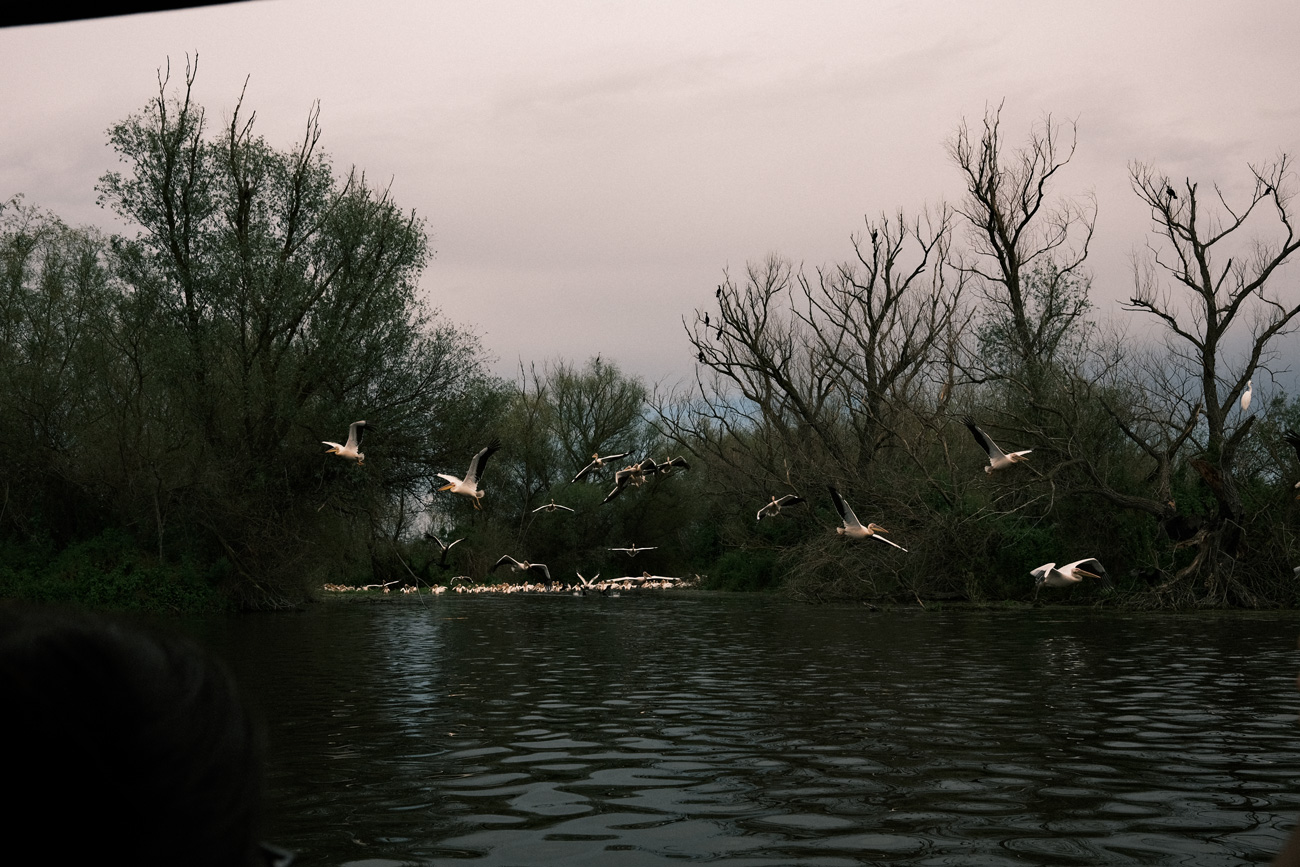
Exhibition on the relation human - more than human and research project focusing on the Danube Delta in Romania.Read more

Ecologias da Água
Residency programme for artistic creation and transmission dedicated to the ecology of water and a sensitive relationship with the living world in rural Portugal.Read more