obsolete.studio
En / Fr

Low Tech
Social Impact
 / Portraits

Dasha Ilina

Diane Pricop
15.12.21

We sometimes hear about those people with exceptional backgrounds who have been doing the same thing forever. High-level athletes, star dancers, or models, these are the kinds of jobs that require accomplishment from an early age. Dasha Ilina is one of these people, and fortunately, she thrives in her practice, the artistic field being sufficiently broad and varied to allow for renewal.

Her story begins a generation earlier when her mother dreams of becoming an architect. Her parents, from rural Siberia, do not support her choice, and she lacks the means and resources to finish her studies. Throughout her life, she tries to get closer to the profession by working at various jobs. Dasha's arrival is a godsend; she sees a chance to instil her passions and pushes her to embrace an artistic career.

With no say in the matter, little Dasha starts piano, architecture, dance and other classes, and feels frustrated that she cannot go out and play with her friends. "You'll see when you grow up, it's for your own good" - who hasn't heard this phrase from their parents? Dasha is only six years old when she joins a school specialising in architecture in Moscow; from simple drawings to start with, to creating a structure for graduation at 14.

The following year, she flies to the United States where she attends three years of high school, again specialising in the arts, this time painting. During this period, she enrols in a summer architecture course at a New York university; Dasha imagines herself going out, meeting people, but spends the entire programme keeping herself awake more than four hours a night to finish her work. "If you think it's hard, don't enrol in the architecture programme, it's only the beginning. That’s what one of the students, also an assistant to the professor, suggests to her... This experience leaves its mark on her.

Dasha now applies to architecture universities, but she already knows that she doesn't want to push it any further. She is also interested in graphic arts, but it is the Parsons School in Paris that appeals to her. Originally based in New York, the school is renowned for its fashion courses, the famous artists and designers who have passed through it, and the filming of the show "Project Runway".
Dasha is accepted into the Paris branch, for the "Strategic Design and Management" programme, which focuses on brand collaboration and the organisation of cultural projects. She starts studying there in 2014.

In reality, she doesn't want to embark on this particular career. At the time, she is mainly looking to leave the US, and Paris seems to be a good option. After a year, she drops out of the program and joins "Art, Media and Technology" at the same school; her teachers are recognized practitioners, such as Nicolas Maigret from DISNOVATION.ORG and Félicie D’Estienne d’Orves. They accompany her throughout the course, and introduce her to critical thinking, particularly on the issues of technology. Moreover, the director of her programme is none other than Benjamin Gaulon, with whom she will collaborate on several projects later on.

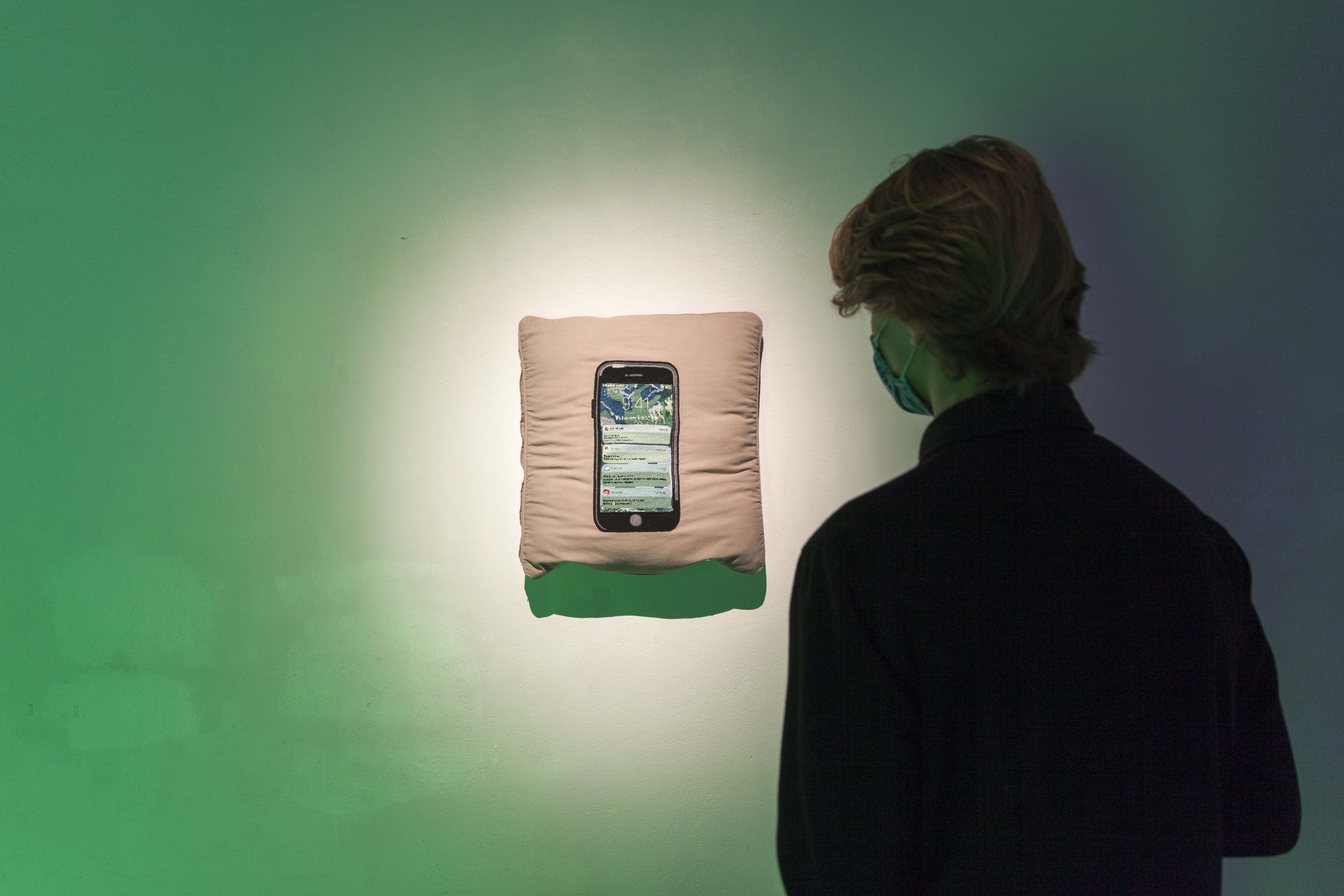
It is in this context that Dasha starts the Center of Technological Pain which is the subject of her thesis during her last year of study. Starting out as a simple joke, she has no idea yet that she will devote three years of her life to it, nor that this project will make her popular in the digital arts world. It is meant to be critical of our behaviour towards technological tools, while keeping a parodic and absurd character.

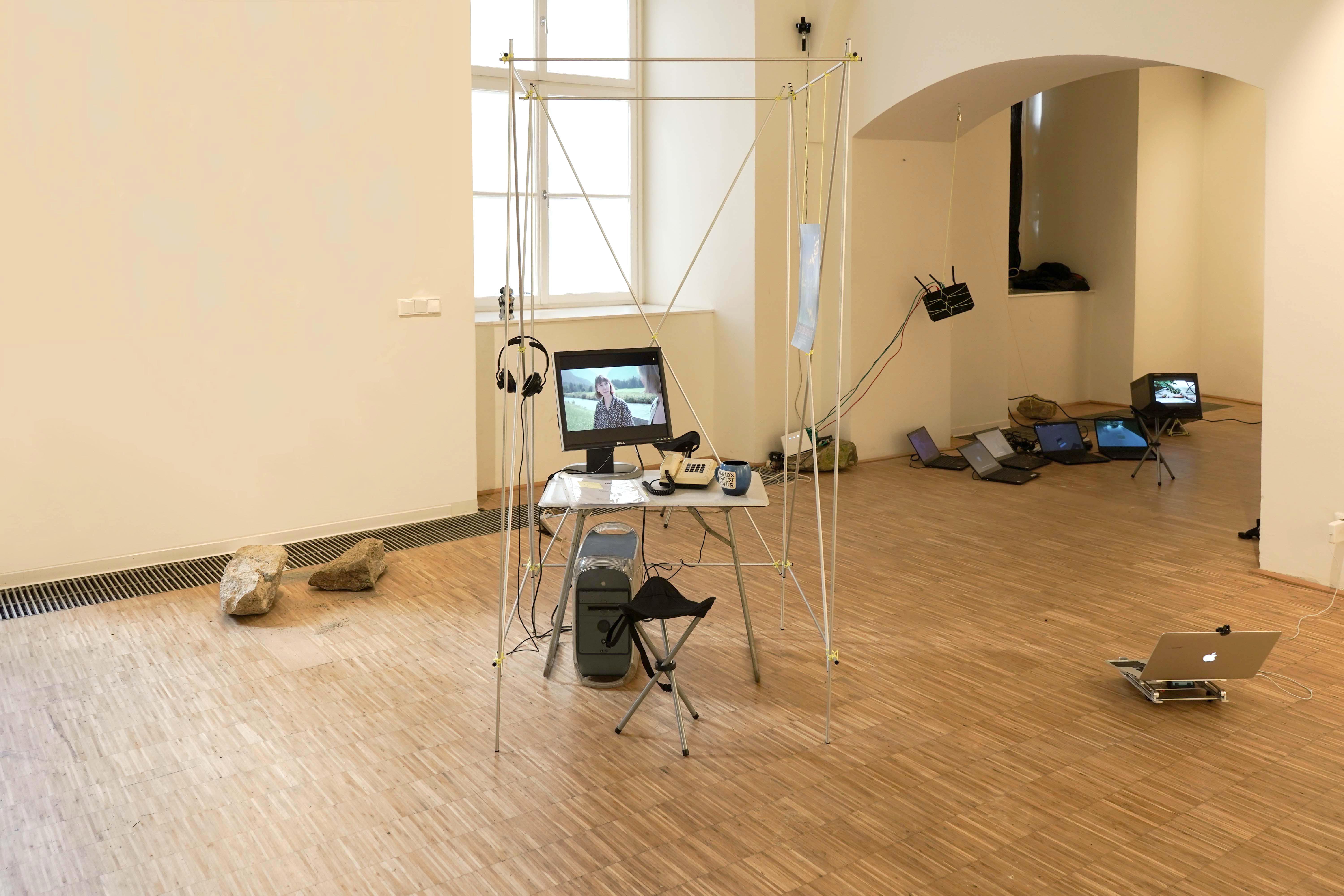
Although she continues to exhibit it regularly, a new idea emerges during the period of lockdown while attending the Art Meets Radical Openness festival: the Center of Networked Intimacy. The association servus.at invites her for the residency that leads to the workshop we know today.

Photo credit : MU Artspace

But before going to Linz, she makes a detour to the Alps for a mini summer residency in the middle of nature with a dozen artists. Her research on ambient awareness catches the interest of two of them. Together, they conceive "Say yes to grave", a Public Service Announcement (PSA) style video; popular in the USA, the PSA is a short message broadcast to warn and modify the behaviour of the general public with regard to a sensitive subject, such as tobacco consumption. Here, they address the issue of protecting our personal data after death and our relationship to profiles in this particular context.

You've guessed it; Dasha, brilliant, is flourishing in this field.
Since 2018, she has been multiplying her interventions, exhibitions, conferences, workshops, residencies, and making the news. She show her work in major European institutions, from the Watermans Centre of Art to Ars Electronica, or even the Centre Pompidou.
At the same time, she co-founds the NØ organisation with Benjamin Gaulon, which promotes artistic and critical research on the impact of technology on our lives and our environment. Together, they also create the NØ SCHOOL NEVERS, a hybrid project between a residence, a research and experimentation laboratory, and a place of conviviality.

The human approach is essential in the conception of these projects, it allows her to get an idea of the general feeling about a given subject, but also to deepen this subject with a small audience. For Dasha, this aspect is more important than the exhibitions of her work. So, not surprisingly, we find her workshops and NØ's projects in the calendars of Stéréolux and the Gaîté Lyrique for the coming year.

Dasha Ilina has succeeded and continues to thrive as an artist and activist. She teaches us that with a critical eye, details that may seem trivial to us, can take on an unexpected magnitude and become the driving force of our commitments.

As for her mother, she never stopped listening to her heart; she ended up working in landscape design, but she decided to focus on culinary delights which she promotes as an influencer.