In the waiting room, a few people are already seated. Outdated prevention posters cover the walls, magazines are thrown on a coffee table, the general atmosphere seems heavy. You wonder if your neighbours are there for more serious reasons than yours. Finally your turn comes; Artist Dasha Ilina is the one receiving you today. Welcome to the Center of Networked Intimacy.
This psychologist's office-like centre is a project that aims to help all those whose relationships are affected by technology, and more specifically, by social networks. To what extent do they affect our relationships? Dasha tries to understand this and shares her insights with us, through the story of the first workshop conducted as part of this project.
Center for Networked Intimacy
05.12.21
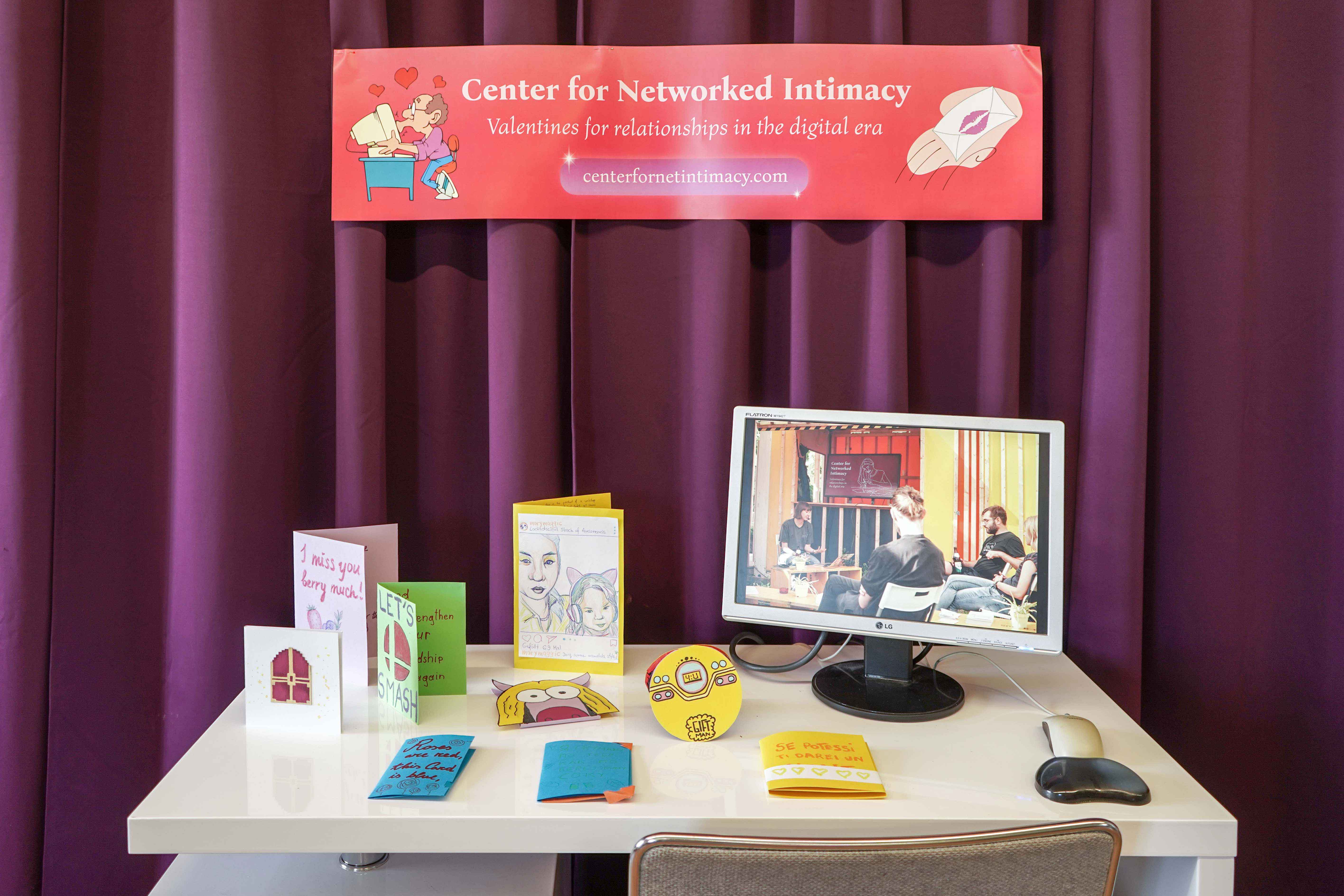
To understand the nature of the Center of Networked Intimacy, we have to go back in time. During her studies, Dasha often heard her colleagues complain about physical ailments caused by always facing a screen. She came up with a series of parodic DIY devices to help them; preventive tools, assembly instructions, or Yoga to relax while keeping up with the news. The Center of Technological Pain was born, a fictitious company that offers DIY solutions to technology-related problems. In constant search of new solutions, she organises events, participative workshops and exhibits her results to the general public.
The model on which Dasha's new center is being built is still in its early stages; after the success of her first project, she sees herself creating several more centers in the future dedicated to different human problems arising from technological tools.
The idea for the latter came from a videoconference presented as part of "Art Meets Radical Openness", a festival based in Linz to which she applied. Organised by the association servus.at, it is held in two stages: the first year is dedicated to artistic residencies, which determine the theme of the following year's festival. Dasha is invited to join the residency, in order to launch a workshop.

After researching the topic of social networking, she came across an intriguing expression: "ambient awareness". This is a sociological term that describes our relationship with those around us on the networks, and particularly the fact that we know about their lives without ever asking about them. And this is the case for most of our relationships today; looking at posts or a story, we feel like we know the daily lives of people we no longer have contact with. Before this phenomenon, the process was conscious; we had to make the effort to think about our friend and contact them to check in.
So to complete the circle, Dasha goes to Austria for a few weeks. Luckily, her residency takes place in August 2021, a period marked by the end of health restrictions. She starts by gathering a few participants and presents them with the results of her research in a small conference; in addition to the ambient awareness, the lockdown during the covid crisis has strengthened our need for IT tools.
Remote working, video chats and festivities, and online events have become part of our daily lives, allowing us to remain active and offering us an alternative to loneliness. The aim of the following workshop is to assess our relationship with our social network environment.

Dasha asks the participants to think of one person with whom they have this ambient relationship, and to question their feelings towards that person. The priority is to choose someone they know personally. The workshop quickly turns into a therapy session; one of the participants feels guilty for not having acted when she knew that an old friend of hers was in trouble, another knows all the personal details of an artist she met on the networks thanks to the information on her profile... In short, despite the difficulty and intensity of the exercise, everyone identifies a person on whom to focus.
This is followed by the making of a card, like a Valentine's Day card, addressed to that person; it is equipped with an audio device that allows a message to be recorded and played back. After careful consideration, the participants have to communicate their perception of their relationship to this person in a clear and open way.
The workshop is documented in a final exhibition open to the public. Dasha suggests that the participants leave the contact details of the recipients of the cards and send them after the residency. But for most of the participants, the message is so personal that they do not dare to go any further...
In our virtual lives, we feel we know the people around us. But these people only reflect the image they choose to convey on social networks, so when it comes to crossing the barriers of reality, it is difficult for us to make the relationship real, and to admit to these people that they are part of our lives.

And Dasha has clearly identified this paradox. She is already thinking about the different ways to develop her next workshops. We will meet her again in March 2022 at Stereolux in Nantes for a new workshop, which will allow her to continue her research.
Through this first experience, Dasha Ilina took on the role of a psychologist without expecting it, making the Center of Networked Intimacy more than just an art project; it is an emotional outlet at the intersection of art, technology, and humanities.
Related Projects and Articles
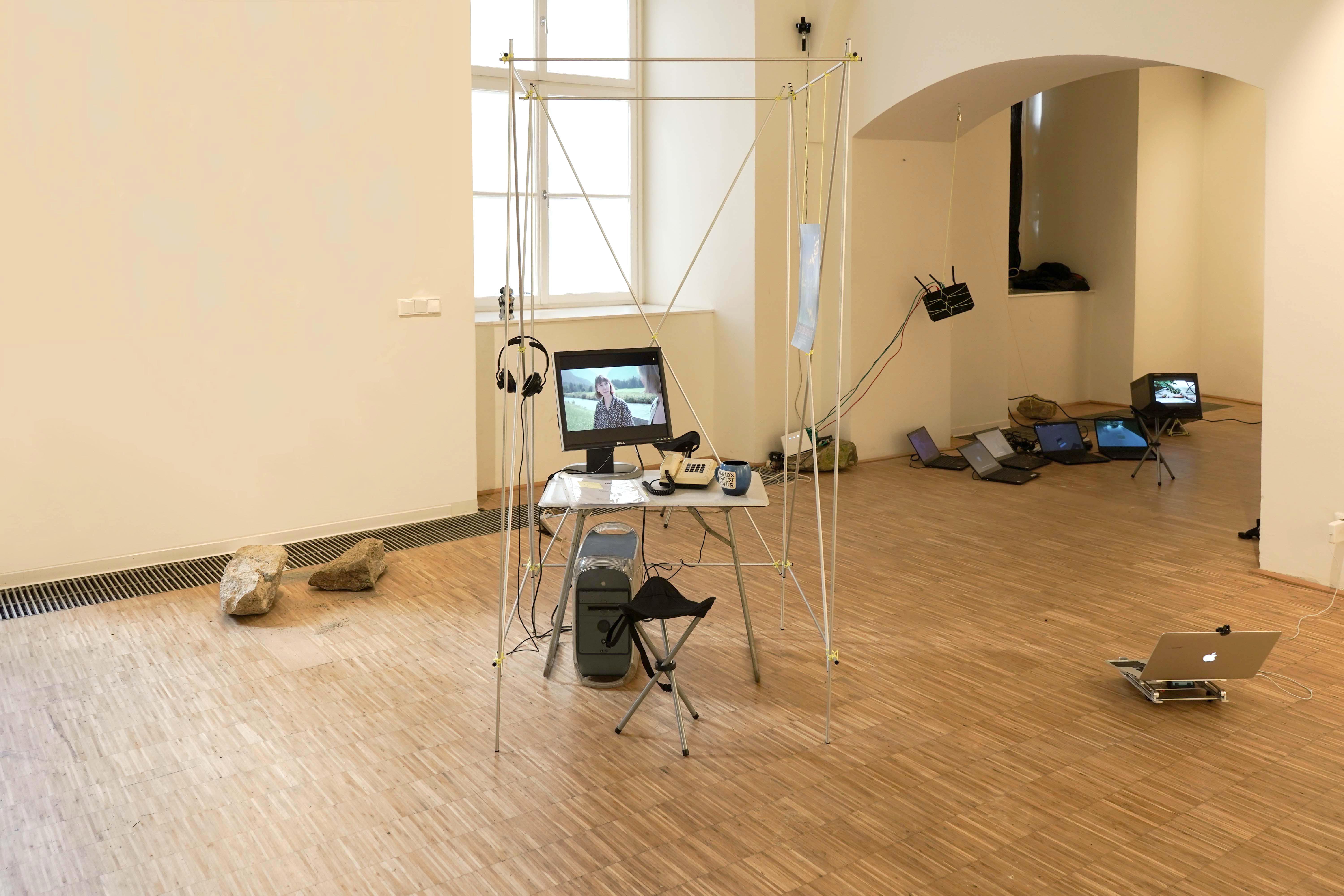
Dasha Ilina / Portraits
Dasha Ilina designs techno-critical installations that question our behaviour in relation to technological tools, while retaining a parodic and absurd character.Read more
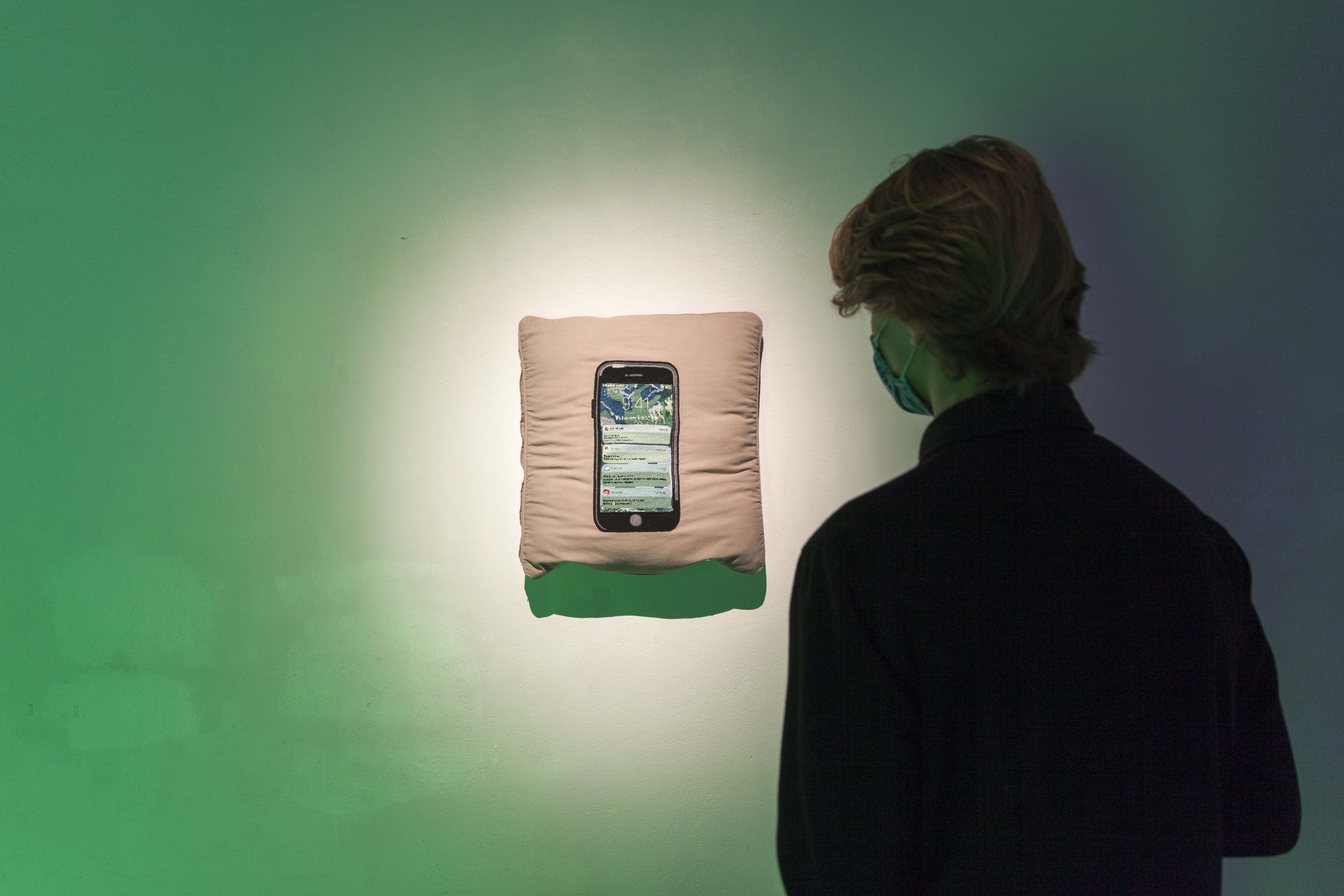
The metaverse in the era of global pandemic / Focus
During the periods of lockdown, technological tools proved to be very useful; however, they are having a very real impact on our social behaviour and some artists are questioning the future of our society.Read more