Such is the philosophy of Sébastien Robert, artist and researcher. Driven by his passion for music and photography, he travels the world meeting indigenous peoples and dedicating himself to the research of endangered ancestral musical rites and traditions. We can assume that devoting himself to this vast task is a long-standing vocation, or a childhood dream for the artist, but the reality is different; an event disrupts the course of his life..
Sébastien Robert
17.02.22
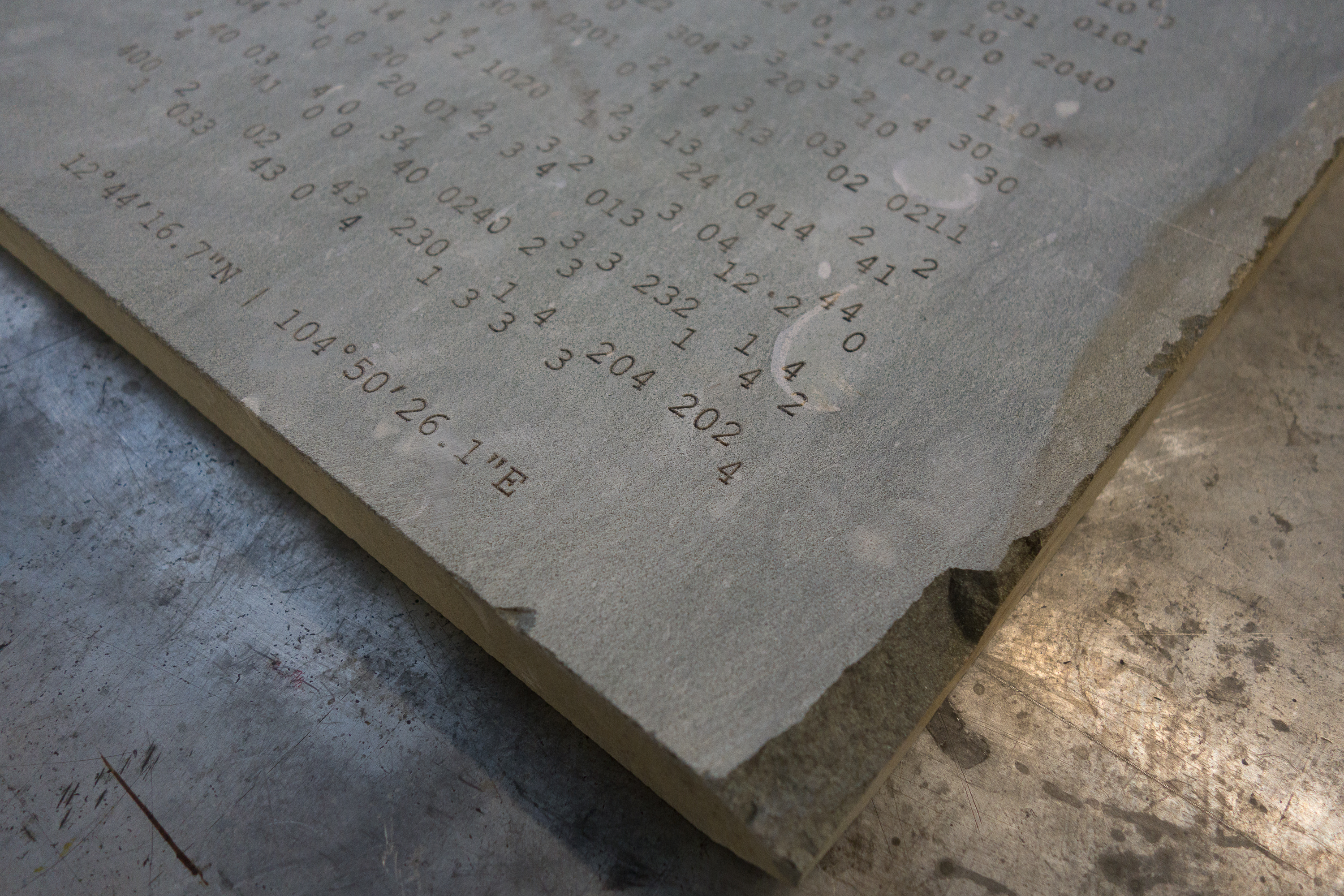
Photo credit : Charlotte Brand
"I am not going to change the world. I am here as an artist to try to bring another perspective."
Despite a natural inclination for the sound and visual arts, Sébastien had a rather classical academic career; when he reaches higher education, he leaves his native Nantes for Lyon, where he enters a business school. His studies do not thrill him very much, and he soon feels stuck in a system whose only escape is electronic music, a first turning point for him. Lyon's nightlife is effervescent, he discovers clubs, parties, festivals, which gradually open the way to digital arts.
In 2013, Sébastien, like many students in school, is asked to do a semester abroad and leaves for Taipei for four months, after which he does humanitarian work in an orphanage in Kathmandu for the remaining two months.
During this second stay, he stays with a Tibetan family, part of an indigenous community from the Langtang Valley in the Himalayas that has been immigrating to Nepal for over 400 years. The family takes a liking to him, and invites him to attend a traditional festival of their unique culture whose customs are known only to a handful of people. Nestled in the village of Kyanjin Gompa, somewhere between Nepal and Tibet, Sebastien spends a week attending prayers in the monasteries, catching yaks, shooting arrows, observing songs, dances and rituals. And for the first time, he photographs what he sees, and records what he hears; this is the birthplace of his artistic practice. But at this precise moment, Sébastien does not know it yet.

Photo credit : Pieter Kers
As time goes by, our artist seizes various professional opportunities, including an internship at a digital arts festival in The Hague in 2014. He is increasingly open to artistic practices related to technology, and even more broadly to science. In France as well as abroad, he familiarizes himself with the job market in this field and at the end of his studies, he gets involved with the Mirage festival in Lyon or the FIBER festival in Amsterdam.
But on April 25, 2015, a horrifying event shakes the planet: a series of earthquakes violently hits Nepal, leaving cities in ruins and thousands dead. Sébastien learns that a glacier has collapsed in the Langtang valley, sweeping away the small village with its unique festival. There are only two survivors.
In the blink of an eye, an entire culture disappears, and with it its dialect, its music, its traditions... At that moment, all that remains are the photographs and recordings from 2013, and the memories of a human adventure. Sébastien is in shock.
His reflections lead him to the following observation: disasters will multiply with time, whether natural or not, cultures in the four corners of the world are disappearing. The idea of going into the field to research these endangered indigenous musical cultures was born.
He starts to develop his artistic practice alongside his work in culture, but as time goes by, his work as an artist grows and he decides to dedicate himself entirely to it. In 2018, he joins the Master Art Science between the Royal Conservatory and the Royal Academy of Arts in The Hague. The choice of course is not insignificant; for Sébastien, it is not only a question of documenting musical and sound traditions of a disappearing culture, nor even of solving the related problems, the issue is much more subtle.

Photo credit : Charlotte Brand
Instead, Sébastien seeks to preserve them in an unalterable and inalienable way; he collects materials that are specific to the regions and symbolic of the cultures he visits, with a view to transforming them into a support for the recordings. To go further, the materials selected have a much longer lifespan than an audio cassette or a digital file, because Sébastien seeks to inscribe music and sounds in eternity. For him, simply taking stock of the disappearance is to minimize the complexity of the phenomenon. We must also understand the causes.
He begins a cycle of research that he names You're No Bird Of Paradise in homage to the composer Terry Riley; during his first trip, he goes to meet the Pleng Arak musicians in Cambodia, who practice a shamanic ritual of healing through music. The music should only be heard in this particular context, so Sébastien codes the recordings and has them engraved on sandstone tablets. For the next project, he flies to Chile in the Araucanìa region, where he lives with the Mapuche people.
Hit hard by global warming and government expropriation of land, Sébastien manages to inscribe ancestral drumming rhythms into the sap of a sacred tree through a sensitive crystallization process. Finally, in his latest project, which we know about, he shows us that the more we develop our communication channels, the more we disrupt the natural radio waves produced by the aurora borealis, which in turn risk becoming extinct. And the visualisation should be done in light!
His works are usually presented as immersive installations, they are the result of the collection of information, on the one hand his own research, and on the other hand the human experience on the ground. So far, everything seems simple, but his way of working is particular; the preliminary research remains minimal in order not to bias his experience. The central part are the encounters on the spot, and he allows himself the freedom to deviate from the initial subject. When he returns from his expeditions, Sébastien resumes his research to find the appropriate scientific process(es) to transform his recordings into an artistic medium. And each time, the result is surprising.
Each time he travels, Sébastien returns with a different way of seeing things, learned from his hosts. As an artist, he is constantly questioning himself, trying to find the right balance between indigenous knowledge and Western Cartesian methods, and putting them into perspective through his work.
All these experiences had a strong impact on Sébastien, but that's without taking into account the freedom he allowed himself in his life choices; business school taught him how to manage complex projects, and a natural disaster on the other side of the world pushed him to rethink his career. The village has since been rebuilt and the younger generation has taken over.

Photo credit : Charlotte Brand
Above all, his journey shows us how a tragic event can ultimately become the motor of positive change. As Walter Benjamin would say, pessimism must be organised!
Sébastien Robert does not think he will change the world. Yet he brings another perspective and inspires those who discover it. That's the first step.
But at this precise moment, he does not know it yet.
Artist