Remember the first computers before their worldwide conquest. Although practical, they were bulky, unsightly and, above all, slow. But in a few years of development, they have become an indispensable tool with seemingly unlimited functionality. Now that we are used to their efficiency, do we have the patience to go back to an old model? The answer to this question should determine the extent to which we are able to step back from our increasing use of electronic tools. Like other artists, Marie Molins explores our relationship to the digital by applying low-tech principles; her project NO_SCREEN is halfway between design, media archaeology, and reverse engineering.
NO_SCREEN
16.01.23
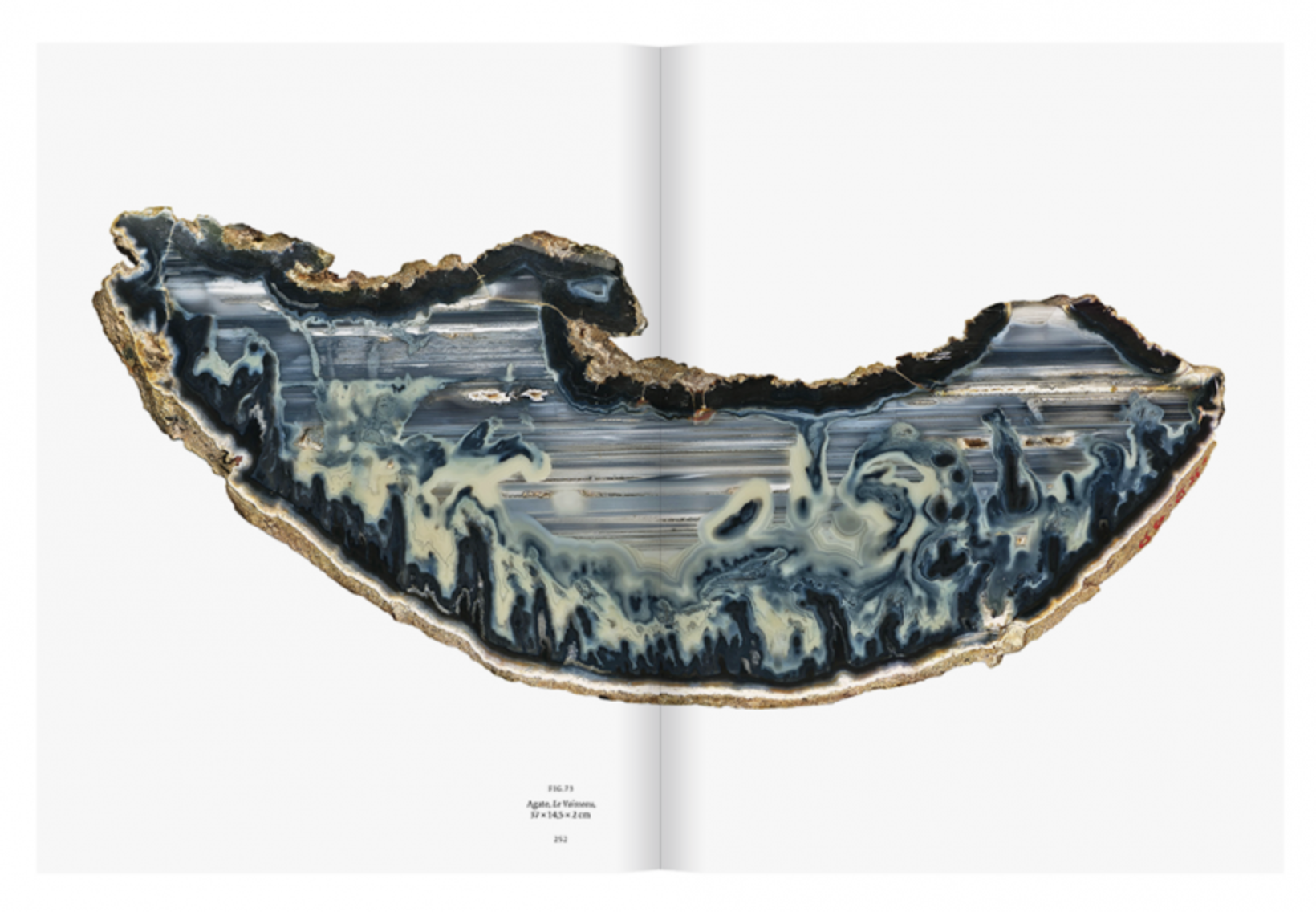
With a degree in media archaeology, a discipline that studies the impact of the integration of technology in our societies, Marie realised during her PhD that everything she had learned about digital media up to that point was wrong. What we see on our screens is not a reproduction of the physical reality we experience. When we face the camera, our image is recreated by a series of pixels in a virtual form, but never has any materiality other than that of the hardware elements of the computer. Where it really exists is in the physical object, each element of which can be taken apart. In A geology of Media, theorist Jussi Parikka reminds us that there is no media as such, everything comes from the earth. On the other hand, the philosopher Vilem Flusser notes our fascination with technological objects as totems or magical objects. Marie thinks that this fascination will disappear once we understand that the computer in our hands is only earth.
To do so, she seeks to put the human being back at the centre of digital creation, while moving away from the idea of an interface. Her main motivations are based on the reduced use of digital processes. The first is based on a personal observation: in digital art exhibitions, the technical side prevails over the conceptual message and its scope. We therefore see a profusion of technological objects whose functioning and intention we do not understand. The second is that we spend a good part of our daily lives looking at screens, the artist wants to propose an alternative to the permanent visual spectacle we experience. The last motivation is ecological; we have become accustomed to digital objects without having a clear idea of how they are constructed, nor of their environmental impact.
Marie therefore takes up the basic principles of digital technology, namely immersion, communication, interaction and interactivity between materials, while seeking to show us what is hidden behind our screens. The idea then comes to her to create an object, or more broadly a space, in which the materials, their mechanism and the energy that animates them will create a form of information, and will be visible to the public. Imagine typing on a computer keyboard and being able to observe the entire mechanism and the routing of the information until the sign appears on the screen. As with an interface, Marie wants to translate energy into a signal, and show us its progress from start to finish. In reference to the No School for their low tech approach and their sense of collective, she calls her project "NO_SCREEN".


The artist then engages in a design process combined with reverse engineering to create her work. To begin with, she had to deconstruct a computer and study each material, in what form the material conducted energy, and whether or not the communication signals between the materials were visible. The metals and minerals were raw before being polished, washed, manufactured and then integrated into the circuitry of a motherboard for example. Then Marie tries to understand how the interaction of these materials with energy will be transformed into action. Technically, implementing such a process should be quite difficult through a single object; given the quantity of materials and the complexity of the mechanism, logic leads Marie to consider the immersive installation as a medium, as if the audience were inside the machine.
This is where the design issues come in; how do the parts fit together? Will there still be a need for manufactured products? Do the pieces need to be positioned against a wall? Will there be any levers to activate? What is the reading direction of the work? How does the interaction between the work and the public take place? In what form will the information be translated: an object, an essence, words? To answer these questions, Marie needs to surround herself with experts: a geologist for the materials, an architect for the layout, and an engineer for the computer operation. She draws the sketches of the rocks and imagines how to cut them to facilitate their interlocking, she thinks of producing energy by friction in the manner of a dynamo. She visualises the installation in a 10m2 room to give the public a feeling of globality, as they will have to perform a series of gestures to activate it.
This is the way the experience should be: the room will certainly be circular, panoramic, to give a fluidity to the process. The person will have to remain in the room throughout the experience and will not be able to leave until the end, with only a glass door separating them from the outside. At the entrance, there will be a written protocol that the person must follow. He or she will have to activate a crank that will send the message to the machine, and then contemplate the path of the message through the circuits. At each stage, points are activated to show where the message is, for example crystals that light up. By the time the message made its way through the circuits, ten minutes would have passed. At the end, the person will retrieve the information form that he or she has produced through this mechanism.

For the time being, Marie is collecting the pieces one by one and is considering the possibility that the installation will remain at the draft stage. She has counted about thirty materials, some of them rarer and more expensive than others, which can be a problem if they are to be reproduced on a human scale. So one solution would be to reduce the installation to the size of an aquarium in which materials with piezoelectric properties could produce light or a heat source. The principle of activation by a crank would remain the same, but the overall mechanism would require more manufactured and electronic objects, which would conflict with Marie's original intention.
However, other alternatives exist, notably in the form of scientific fiction; a book of mechanical explanations of the whole project, information on the conductivity of materials, with sketches and illustrations. This format is part of her skill set, and meets the conceptual expectations of the project as it deals with the creation of information without a digital interface. This would allow her to remain at the speculative stage, or to complement the installation. She could create a collective of fictional characters as she is already used to doing. Most importantly, the cost is much more affordable and she would no longer have the dilemma of over-production and a huge environmental footprint.

Marie Molins has set herself the task of exposing the circuits of information in digital instruments as in an open book.
By combining an artistic approach and a design methodology, she offers us the possibility of enriching our perception of our tools, and invites us to take a moment of contemplation.
Artist
Project
NO_SCREEN
Related Projects and Articles
On swiss army knife artists / Focus
In a world of constant and rapid change, it has become more than ever necessary to build bridges between different fields, and to diversify one's artistic skills.Read more