At first glance, it's hard to compare someone like Marion Roche to a turtle... or perhaps to the idea we have of a turtle. She seems rather dynamic, even hyperactive, eager to make her mark, and constantly on the move.
Between Lyon and Berlin, via Tuscany, Marion settles down, participates in local life, creates communities, builds studios, founds organisations, without forgetting to practise her art, and to always look for ways to renew herself.
Marion Roche
22.11.21
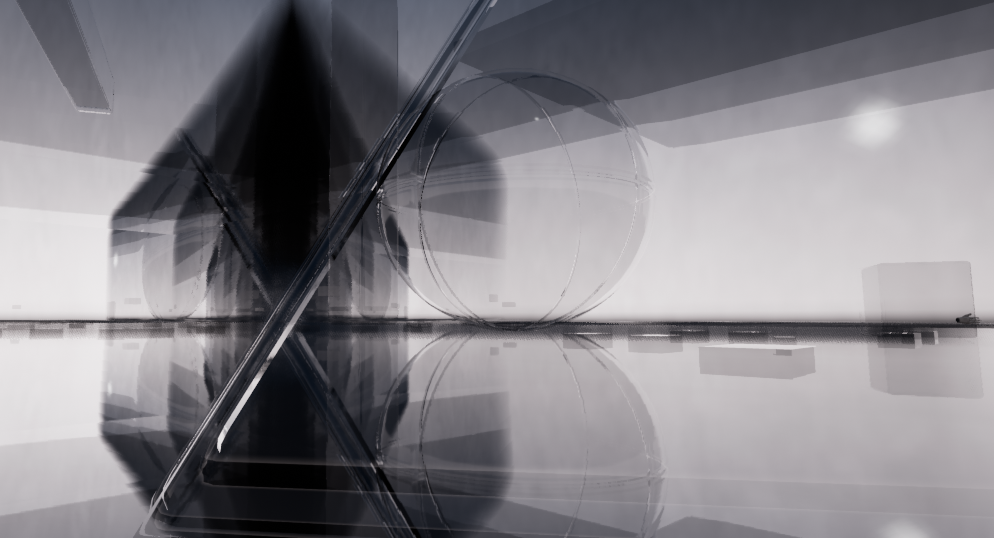
"I am a turtle: when I go to a place, I create things”
As a child, she is absorbed in DIY activities at home and develops a passion for assembling spare parts. So much, that she can't wait for the washing machine to break down so she can finally take it apart and understand how it works. Sometimes she even dismantles perfectly functional objects! The memories of this convivial period are strong, and will deeply mark her practice.
Marion is 15 years old; fascinated by photography, she discovers a specialised shop in Vieux Lyon owned by a certain Mr Berthet. He is an active antique dealer and collects all kinds of photographic works, but stereoscopy is the medium that attracts Marion's attention. Based on the model of our vision, this process superimposes two images of the same subject, that are taken according to the distance between our eyes. They are then placed in a viewer. Our brain puts these images together to form a single image, and our eyes will perceive this single image in relief.
As you may have guessed, stereoscopy is a synonym for the acronym "3D".
The aspiring artist befriends the antique dealer; she spends her free time at the gallery and collects her first works. At the same time, Marion experiments with industrial music and film; she has a black and white super 8 camera with which she films herself and her friends. They go to construction sites and bang on metal objects they find while shouting. She falls in love with metal for its sound.
But what encourages Marion to create forms is the discovery of monumental metal sculptures during a trip to Berlin. At 17, she knows exactly what she wants to do. She starts training on the welding machines she finds in her parents' garage.

Photo credit : Carlo Bonazza
She begins to study philosophy in Lyon, and seizes the opportunity to go to Berlin for a first year of Erasmus for a master's degree. Her stay lasts five years.
There, she works at the Tacheles, the legendary artists' squat in the heart of the Mitte district, where she trains herself in metal sculpture. When she stumbles on a creation, she sees the solution in a dream: she visualises the pieces in 3D, assembles them, and then gives herself the next steps to follow. Always passionate about sound, she creates metal musical instruments that she tests with her band, and does sound for films.
But Marion's career takes a political turn with the threats hanging over the residents' heads; she becomes the president of the association ArtProTacheles, and advocates for setting up art production and distribution spaces, made by artists and for artists. She participates in the development of partnerships between these gallery workshops and hostels or hotels in several European cities.
Life in squats is not easy, and the Tacheles officially ended in July 2013, a series of painful events, the violence of which shocked Berliners. The site, now vacant, is becoming a symbol of the fight against gentrification in Europe.
Together with a group of former residents, she moves to Marzahn, in the eastern suburbs of Berlin. The former GDR district, popular and isolated, is known for the influx of Syrian migrants after the 2013 crisis. This is an opportunity for the artists, who rush to build new places, starting from scratch. Marion works with local youth, refugees, and architecture students on various socio-cultural projects: they aim to breathe new life into the neighbourhood, and integrate immigrants into it. This phase of her life is happy, but she gets tired of creating workshops that will eventually become ephemeral..

Out of a desire for stability, and to get back to philosophy, Marion returns to Lyon to take up again her master's degree that she had not finished in Germany, and takes advantage of the situation to reopen a workshop in Saint-Just. Then she starts writing her thesis on the theme of "process", or the idea of being "in the making".
She spends time in Italy during an artistic residency, where she curates a sculpture park at AMACA, and co-founds the FakeComa studio, for which she is responsible for digital art exhibitions.
But it is not until two years later, on her second return to France, that something clicks: she can no longer bear the idea of bringing new fixed forms into the world, nor of depending on workshops, the logistics of which are exhausting. With her growing interest in new technologies, she takes up a master's degree in "digital arts director" in Saint Etienne, France, where she discovers the wonderful world of computer programming.
It’s love at first sight with virtual reality; for Marion, it's both a multitude of new possible developments for her projects, but also a process that fits with her way of seeing the world. All the artistic forms she has experimented with before, make sense: stereoscopy, music, video, sculpture... put them together as if they were individual pieces and you might just build a virtual reality masterpiece.

Today Marion is pursuing her PhD in philosophy, teaching at the Ecole des Beaux-Arts in Lyon, and collaborating with the LTBL studio; between the famous Fête des Lumières, and the MAIF prize for sculpture, the fields of experimentation have evolved since the construction sites and the family garage... Her work will have left an indelible mark in time, and on the people who have crossed her path.
So yes, the turtle could well be Marion Roche's totem animal, symbol of the quest for unexplored solutions and harmony with its environment.
Artist
Project
Je viens de te voir en rêve