On the island of Chios, the giant hunter Orion fell in love with Merope, the youngest of the seven daughters of King Oenopio. The king promised his daughter's hand in marriage to the hunter on one condition : he should eliminate all the animals on the island. Oenopio, who believed that Orion would not be able to do so, was proved wrong and did not keep his promise. To dissuade him from taking revenge on the king, Artemis invited Orion to come hunting with her, under the worried eye of her brother Apollo, who then sent a scorpion to kill him. Orion took refuge in the sea, and Artemis, who no longer recognised him, shot him with a fatal arrow. When she realised that she had killed Orion, she placed him among the stars with his dogs, Sirius and Procyon.
Mythology of the stars or how to look within ourselves in the sky
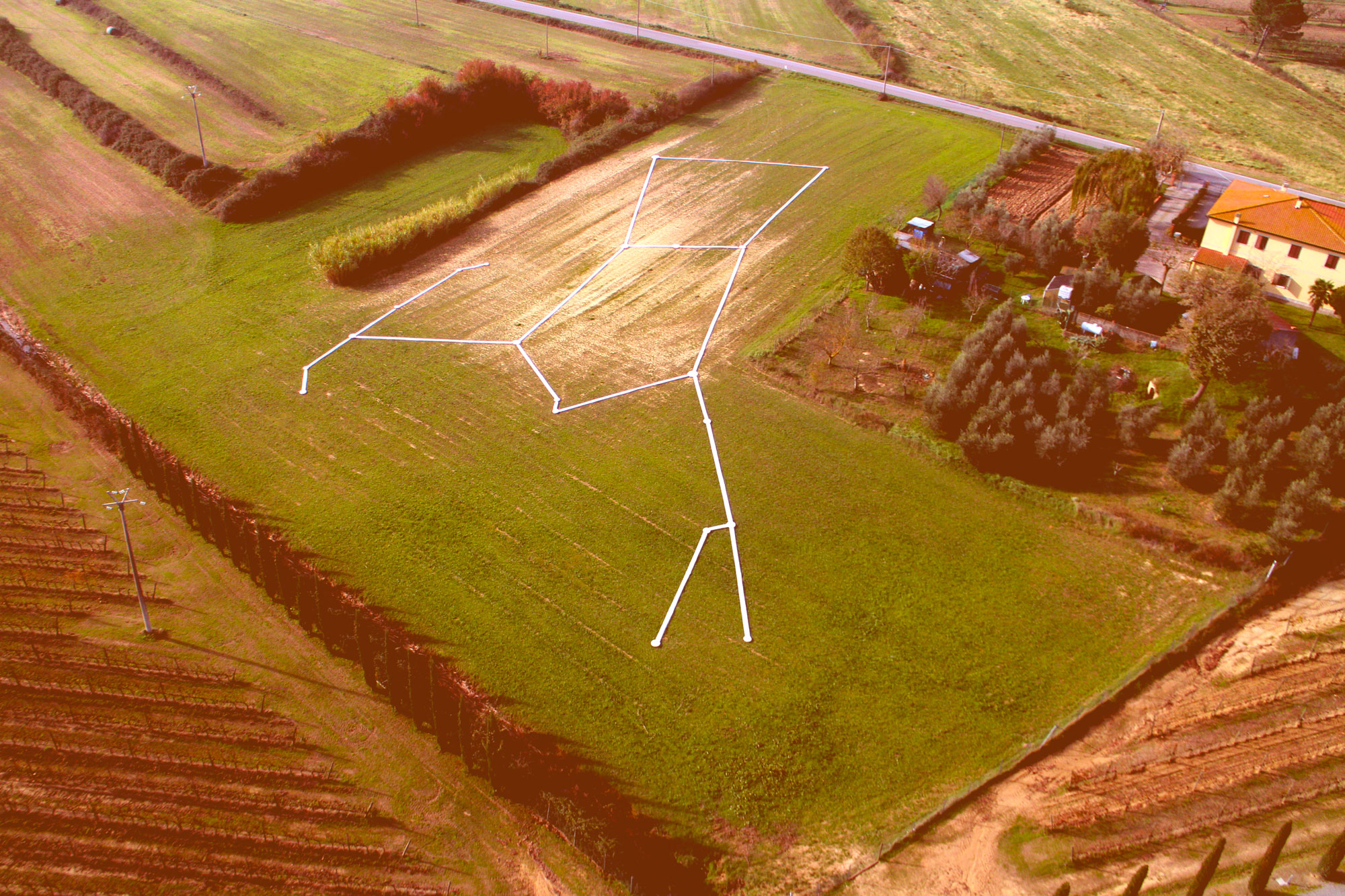
The myth has several versions and interpretations, especially the chapter on Orion's death. But from Pindar to Ovid, the conclusion does not change: the hunter becomes a constellation after his death. Some will remember that Orion and the scorpion never reach each other, even in the sky; when one appears in the East, the other disappears in the West.
Others, like Luca Serasini, focus on Orion, who is always looking for the seventh sister of the Pleiades, a constellation close to the hunter and his dogs. Merope is indeed a star invisible to the naked eye.
To help us remember and locate them, we have given them the names of the characters who have animated Western and Eastern mythologies, and their arrangement on the celestial map echoes their story. However, the first mentions of constellations and stars date back to Mesopotamia. As for the first evidence of their use, we have to look at the Bronze Age, making astronomy the oldest science. Our ancestors had already understood that the movements of the stars were closely linked to the cycles of the seasons, floods and tides, which were essential for managing agriculture, fishing and navigation.

The initial discoveries will have enabled us to organise ourselves as a society, and to develop exchanges with neighbouring societies. Naturally, the need to predict periodic phenomena was added to this, pushing us to develop a measure of time.
Thus, the Egyptians, needing to anticipate the flooding of the Nile, set up the 365-day calendar that we know. Since then, many major discoveries have marked history, making Greek and Arab astronomers and mathematicians famous since antiquity.
The field of astronomy is relatively comprehensive and universal; from basic crop management to space exploration, it has also guided travellers. Throughout the centuries, beyond the simple discovery of new territories, the desire to conquer and monopolise resources has taken over, shaping our current geography.
Although this phenomenon is still relevant, the fundamental questions of yesterday are still valid today; we keep actively searching for answers about the origins of our planet and our universe, as we still believe that they determine our future.

Since the dawn of time, we have looked to the sky as a vast exploration ground, finding meanings in it and attributing myths to our gods and goddesses.
But while the night has been replaced by artificial lighting, the stars are still there, hidden in the sky. They test our ability to remember the stories that bind us, and live on through them.
Frange d'Interferenza